



Stenting of Lipid-Rich vs Fibrous and calcified Plaques: Different Prognosis?

Coronary PCI with contemporary drug eluting stents (DES) in lipidic-rich plaques were not associated with increased periprocedural events at long term compared against plaques with no significant lipidic composition. 
Stents en placas lipídicas vs fibrocálcicas ¿Diferente pronóstico?

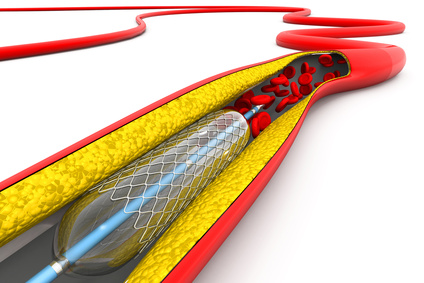
This study recently published in J Am Coll Cardiol looked into the association between lipidic rich plaques detected by near-infrared spectroscopy (NIRS) and clinical events in patients undergoing coronary angioplasty with contemporary drug eluting stents. 

NIRS was used in patients with programed angiography and possible stenting. The evaluated events were cardiac death, infarction, definite or probable thrombosis, unplanned revascularization or rehospitalization for symptom progression or unstable angina. 

At the same time, events were subdivided depending on whether they were caused by the originally treated plaques or by new ones.  


Read also: Non-Invasive Diagnosis of Coronary Spasm: Can We Recommend it?


1999 patients were enrolled in the COLOR study (Chemometric Observations of Lipid Core Plaques of Interest in Native Coronary Arteries Registry). 1621 received angioplasty. 

18% presented events at 2 years: 8.3% corresponded to target vessels, 10.7% to new lesions and 3.1% were undetermined.

There were no differences in events between lipidic-rich plaques and plaque with scarce or none lipid composition after adjusting for multiple clinical and procedural factors. 

Conclusion

The lipidic nature of plaque did not change the prognosis of patients undergoing coronary angioplasty with DES.

Original Title: 2-Year Outcomes After Stenting of Lipid-Rich and Nonrich Coronary Plaques.

Reference: Myong Hwa Yamamoto et al. J Am Coll Cardiol 2020;75:1371–82.


Subscribe to our weekly newsletter

Get the latest scientific articles on interventional cardiology

We are interested in your opinion. Please, leave your comments, thoughts, questions, etc., below. They will be most welcome.


More articles by this author

Coronary Perforations and Use of Covered Stents: Safe and Effective Long-Term Strategy?

Coronary perforations remain one of the most serious complications of percutaneous coronary intervention (PCI), especially in cases of Ellis ruptures type III. In these...

Is it really necessary to monitor all patients after TAVR?

Conduction disorders (CD) after transcatheter aortic valve replacement (TAVR) are a frequent complication and may lead to the need for permanent pacemaker implantation (PPI)....

Is it really necessary to monitor all patients after TAVR?

Conduction disorders (CD) after transcatheter aortic valve replacement (TAVR) are a frequent complication and may lead to the need for permanent pacemaker implantation (PPI)....

Left Main Coronary Artery Disease: Intravascular Imaging-Guided PCI vs. Coronary Artery Bypass Grafting

Multiple randomized clinical trials have demonstrated superior outcomes with coronary artery bypass grafting (CABG) vs. percutaneous coronary intervention (PCI) in patients with left main...

LEAVE A REPLY

Please enter your comment!
Please enter your name here

Related Articles

SOLACI Sessionsspot_img

Recent Articles

Coronary Perforations and Use of Covered Stents: Safe and Effective Long-Term Strategy?

Coronary perforations remain one of the most serious complications of percutaneous coronary intervention (PCI), especially in cases of Ellis ruptures type III. In these...

Is it really necessary to monitor all patients after TAVR?

Conduction disorders (CD) after transcatheter aortic valve replacement (TAVR) are a frequent complication and may lead to the need for permanent pacemaker implantation (PPI)....

Is it really necessary to monitor all patients after TAVR?

Conduction disorders (CD) after transcatheter aortic valve replacement (TAVR) are a frequent complication and may lead to the need for permanent pacemaker implantation (PPI)....
