



Size Does Matter for Long Term ViV

The size of the original bioprosthetic valve impacts long term mortality, as does the type of bioprosthetic valve used in percutaneous reinterventions. 
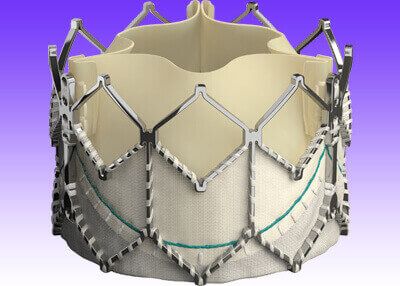
valve_in_valve

The number of patients with failed bioprosthesis is on the rise, mainly due to increased life expectancy.  Valve-in-valve (ViV) transcatheter aortic valve replacement (TAVR) has become more and more common these days and might even become the gold standard. 

There is no large-scale research on long term followup of these patients, both in terms of mortality and reintervention. 

This analysis recently published in the European Heart Journal included 1006 patients receiving ViV with mean age 77.7 ± 9.7 years and STS-PROM of 7.3%.

Patents were treated both with the self-expandable CoreValve/Evolut and the balloon expandable SAPIEN/SAPIEN XT/SAPIEN 3.


Read also: TAVR as Anti-Inflammatory? An effect few imagined.


Survival was lower in patients with smaller dysfunctional valves (internal diameter > 20 mm) compared against patients with bigger prosthesis (33.2% vs. 40.5%, respectively; p=0.01).

The smaller dysfunctional valves were independently associated with mortality (HR 1.07; IC 95% 1.02–1.13), as was age (HR 1.21 IC 95% 1.01–1.45) and the non-femoral approach (HR 1.43 IC 95% 1.11–1.84).  

There were 40 reinterventions, most frequently among patients with pre-existing prosthetic mismatch and malapposition of the new device.

Conclusion

In valve in valve, the size of the original valve impacts on long term mortality. The kind of prosthesis used in ViV could affect the need for reintervention. 

Original Title: Long-term outcomes after transcatheter aortic valve implantation in failed bioprosthetic valves.

Reference: Sabine Bleiziffer et al. European Heart Journal (2020) 41, 2731–2742. doi:10.1093/eurheartj/ehaa544.


Subscribe to our weekly newsletter

Get the latest scientific articles on interventional cardiology

We are interested in your opinion. Please, leave your comments, thoughts, questions, etc., below. They will be most welcome.


More articles by this author

Coronary revascularization before TAVI: prior PCI or conservative management?

The coexistence of coronary artery disease (CAD) in patients with severe aortic stenosis undergoing TAVI is common, with a reported prevalence ranging from 30%...

Percutaneous Mechanical Aspiration versus Surgical Treatment of Tricuspid Valve Endocarditis

Tricuspid valve infective endocarditis (TVIE) accounts for approximately 5% to 10% of all cases of infective endocarditis. Surgical treatment remains the standard therapy in...

CRT 2026 | TAVI-CLOSE Trial: Dual Suture vs Suture + Plug for Vascular Closure After Transfemoral TAVI

The transfemoral approach is the predominant strategy for transcatheter aortic valve implantation (TAVI). Although vascular complications are currently less frequent, they remain relevant determinants...

CRT 2026 | NAVITOR IDE: Hemodynamic Outcomes and 5-Year Durability of an Intra-Annular Self-Expanding Transcatheter Aortic Valve

As TAVI expands into younger populations and patients with lower surgical risk, prosthesis durability has become a key aspect of long-term management. The NAVITOR...

LEAVE A REPLY

Please enter your comment!
Please enter your name here

Related Articles

SOLACI Sessionsspot_img

Recent Articles

Coronary revascularization before TAVI: prior PCI or conservative management?

The coexistence of coronary artery disease (CAD) in patients with severe aortic stenosis undergoing TAVI is common, with a reported prevalence ranging from 30%...

Rotational atherectomy and its technical secrets: use of floppy or ES guidewire

Rotational atherectomy (RA) remains a very useful tool in the management of severe coronary calcification. However, many of its technical aspects rely more on...

Percutaneous Mechanical Aspiration versus Surgical Treatment of Tricuspid Valve Endocarditis

Tricuspid valve infective endocarditis (TVIE) accounts for approximately 5% to 10% of all cases of infective endocarditis. Surgical treatment remains the standard therapy in...
