The call for applications to participate in the Young Interventional Cardiologists Competition at the Guatemala 2026 Regional Sessions is now open. The event will...
The recording of the webinar “Structural Interventions: TAVI and MitraClip in Daily Practice” is now available on the SOLACI YouTube channel. The activity was...
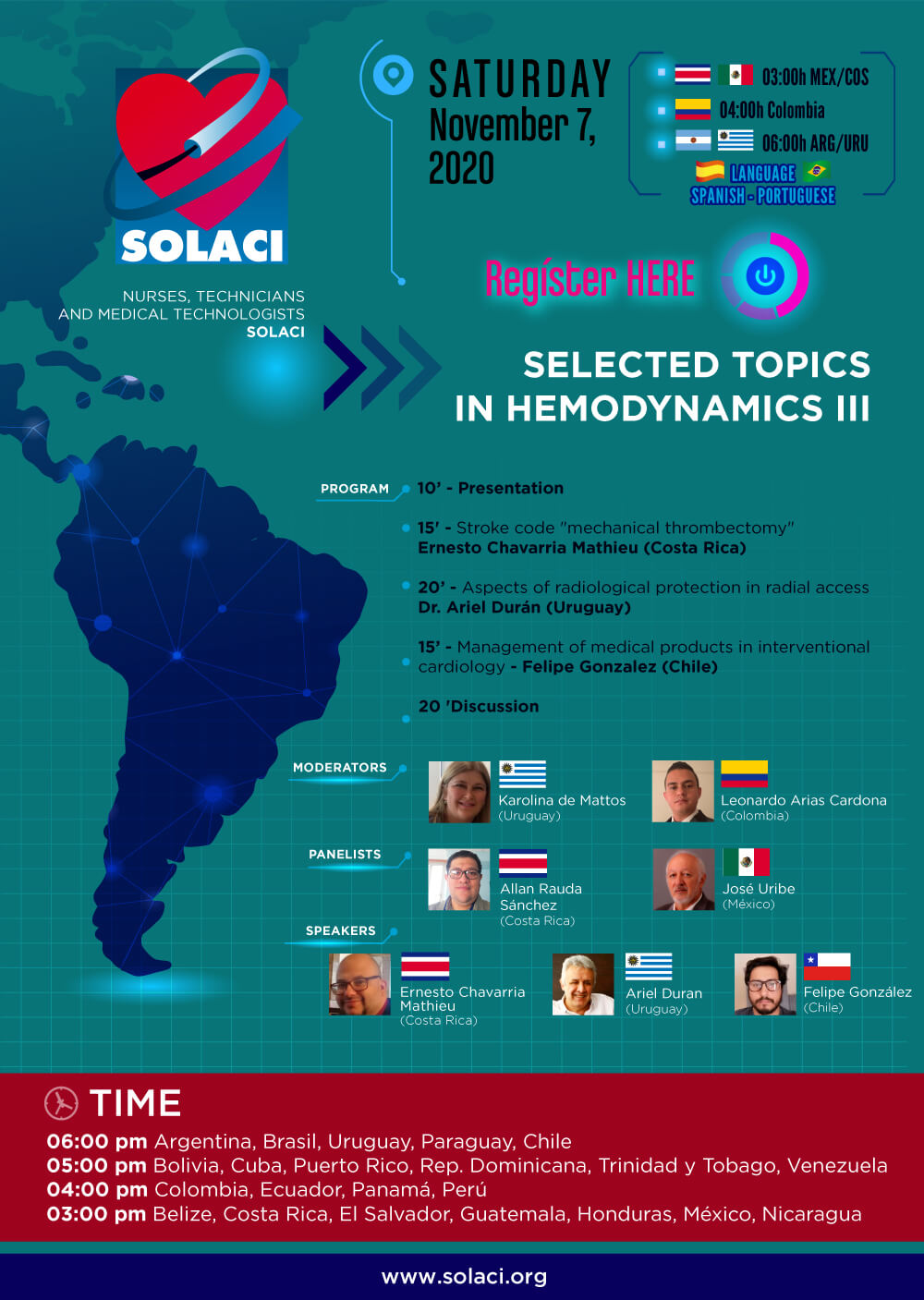
The Latin American Society of Interventional Cardiology (SOLACI), through its Technicians and Nurses Department, invites you to participate in a new scientific webinar entitled...
SOLACI and the Argentine College of Interventional Cardioangiologists (CACI) invite you to participate in a new Open Session of the Advanced Postgraduate Course in...
Plaque rupture remains one of the most important pathophysiological mechanisms in acute coronary syndromes. However, not all ruptures manifest clinically as ischemia, myocardial infarction,...
Peripheral drug-eluting stents have transformed the treatment of peripheral arterial disease by reducing restenosis rates and the need for repeat interventions. However, the emergence...
After a myocardial infarction (MI), non-culprit lesions are often deferred when they are not flow-limiting (negative FFR). However, these lesions continue to represent an...
Modelos europeos de telemedicina, como el servicio finlandés Medilux, permiten realizar consultas médicas online mediante un cuestionario clínico, sin acudir a una consulta presencial.
Modelos europeos de telemedicina, como el servicio finlandés Medilux, permiten realizar consultas médicas online mediante un cuestionario clínico, sin acudir a una consulta presencial.