






This research was designed to test the superiority of plug-based vs. suture-based vascular closure devices in large arteriotomies, such as transcatheter aortic valve replacement (TAVR).
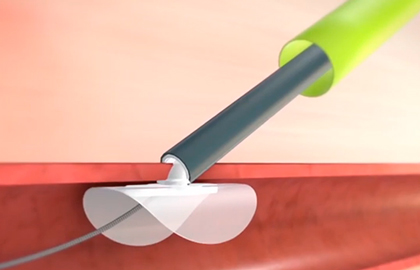
Vascular complications from TAVR are relevant and, in many cases, derive from problems with the closure device.
The MASH (MANTA vs. Suture-based vascular closure after transcatheter aortic valve replacement) study was conducted in two centers, where patients undergoing TAVR were randomized to the MANTA device vs. 2 ProGlides.
The primary endpoint was a composite of major and minor access-related complications. The secondary endpoint included clinically relevant access-site bleeding, time to hemostasis, and device failure (not achieving hemostasis within 5 minutes or requiring an additional maneuver, such as stenting, surgery, or another device).
Between 2018 and 2020, 210 patients were enrolled (mean age: 81; mean STS: 2.7%).
Read also: Should We Discontinue Anticoagulation Before TAVR?
There were no differences in vascular complications between MANTA and ProGlide (10% vs. 4%; p = 0.16). Furthermore, clinically relevant bleeding rates were similar (9% vs. 6%, respectively, p = 0.57).
Device failure was less frequent with the MANTA device (20% vs. 40%, p < 0.001). To fix that issue, MANTA usually required surgery or a covered stent, while ProGlide could frequently solve the vascular complication with an additional closure device.
Conclusion
The plug-based vascular percutaneous closure device was similar in terms of vascular complications and bleeding compared with a suture-based device.
Device failure was lower with MANTA, but rescue maneuvers when needed were different that those required by the ProGlide.
Original title: Suture- or Plug-Based Large-Bore Arteriotomy Closure. A Pilot Randomized Controlled Trial.
Reference: Maarten P. van Wiechen et al. J Am Coll Cardiol Intv 2021, article in press.https://doi.org/10.1016/j.jcin.2020.09.052.
Subscribe to our weekly newsletter
Get the latest scientific articles on interventional cardiology



