



ELUVIA: DES in Complex Femoropopliteal Lesions

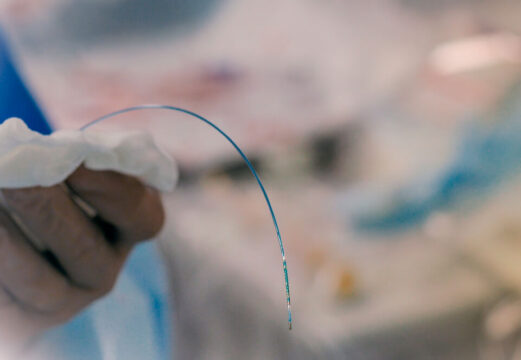
Paclitaxel-eluting stent Eluvia showed promising results after two years with a revascularization freedom rate of 80% despite the fact that these were complex femoropopliteal lesions.
As the safety of paclitaxel-eluting devices becomes more consistent, more studies on its efficacy are being published.

Back in 2018, the safety of paclitaxel-eluting balloons and stents was under scrutiny due to a possible association with all-cause mortality.

It was for this reason that much ongoing research and many soon-to-be published papers were put on hold for several years. Time went by and safety was strengthened until the SAFE-PAD study finally ruled out a problem of safety.

The ELUVIA study included 130 patients (137 lesions) with symptomatic disease in the femoropopliteal area. Its primary endpoint was primary lesion patency. Secondary endpoints included secondary patency, freedom from target lesion revascularization, freedom from surgical conversion, and mortality.

Most patients had intermittent claudication that altered their quality of life. A vast majority of lesions were complex (>70% were total occlusions, >70% were severely calcified, and mean length was almost 200 mm).


Read also: Primary COVID-19 Infection Protects Against Potential Reinfection?


At two years, the Kaplan-Meier estimate of primary patency was 71%, whereas secondary endpoints freedom from revascularization and secondary patency were 80%.

Only 2% of patients required amputation, and a mere 11% converted to surgery.

Conclusion

Using paclitaxel-eluting stent Eluvia showed good results in terms of safety and efficacy in the treatment of complex femoropopliteal lesions.

Original Title: 2-Year Outcomes of the Eluvia Drug-Eluting Stent for the Treatment of Complex Femoropopliteal Lesions.

Reference: Konstantinos Stavroulakis et al. JACC Cardiovasc Interv. 2021 Mar 22;14(6):692-701. doi: 10.1016/j.jcin.2021.01.026.


Subscribe to our weekly newsletter

Get the latest scientific articles on interventional cardiology

More articles by this author

A New Asymptomatic Carotid Stenosis Paradigm? CREST-2 Trial Unified Results

Severe asymptomatic carotid stenosis continues to be controversial seeing the optimization of intensive medical therapy (IMT) and the availability lower periprocedural risk revascularization techniques....

Impact of Baseline Systolic Blood Pressure on Blood Pressure Changes Following Renal Denervation

Renal denervation (RDN) is a guideline-recommended therapy to reduce blood pressure in patients with uncontrolled hypertension, although uncertainties remain regarding which factors best predict...

Hypertriglyceridemia as Key Factor to Abdominal Aortic Aneurysm Development and Rupture: Genetic and Experimental Evidence

Abdominal aortic aneurysm (AAA) is a deadly vascular disease with no effective drug treatment, and risk of rupture reaching up to 80%. Even though...

Atrial Fibrillation and Chronic Kidney Disease: Outcomes of Different Stroke Prevention Strategies

Atrial fibrillation (AF) affects approximately 1 in every 4 patients with end-stage renal disease (ESRD). This population carries a high burden of comorbidities and...

LEAVE A REPLY

Please enter your comment!
Please enter your name here

Related Articles

SOLACI Sessionsspot_img

Recent Articles

COILSEAL: Use of Coils in Percutaneous Coronary Intervention, Useful for Complication Management?

The use of coils as vascular closing tool has been steadily expanding beyond its traditional role in neuroradiology into coronary territory, where it remains...

Treatment of In-Stent Restenosis in Small Vessels with Paclitaxel-Coated Balloons

Coronary artery disease (CAD) in smaller epicardial vessels occurs in 30% to 67% of patients undergoing percutaneous coronary intervention and poses particular technical challenges....

Contemporary Challenges in Left Atrial Appendage Closure: Updated Approach to Device Embolization

Even though percutaneous left atrial appendage (LAA) closure is generally safe, device embolization – with 0 to 1.5% global incidence – is still a...

