






Percutaneous treatment of chronic total occlusion (CTO) has traditionally been via the transfemoral approach (TFA). The use of the transradial approach (TRA) in complex coronary interventions has been increasing. A randomized study assessed the use of TRA vs TFA in complex PCI (58% CTO) and TRA saw favorable outcomes.
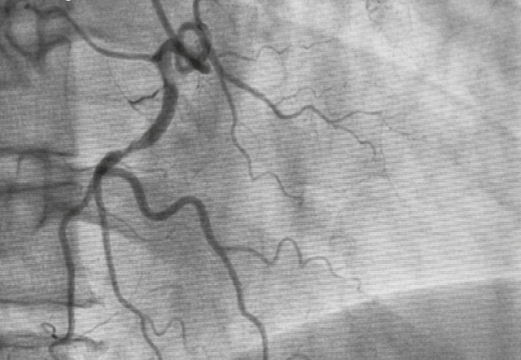
The aim of this prospective, randomized, non-inferiority study was to compare TRA vs TFA in the percutaneous treatment of chronic total occlusions.
Primary end point was procedural success defined as the absence of death, AMI, target vessel PCI or CABG, cardiac tamponade, and stroke.
Secondary end point was incidence of major complications to the access site, including major bleeding, vascular complications requiring intervention or ≥ 10 cm diameter hematoma.
610 patients were randomized: 305 to TRA, and 305 to TFA. Mean age was 61. Most patients were men. The most treated vessel was the right coronary artery, followed by the anterior descending.
Crossover rate was similar in both groups. J-CTO score was 2.1 (TRA) vs 2.2 (TFA), PROGRESS CTO score was 1.3 vs 1.1, and PROGRESS CTO complication score was 2.4 vs 2.3.
Read also: Should Total Occlusion Influence on Revascularization Strategy?
CTO intervention was indicated when there was 85% symptom presence, followed by 5% ischemia presence. Dual access was less frequently used in the TRA group.
As regards results, TRA was non-inferior to the transfemoral approach when it came to procedural success. However, the transradial approach presented lower access site complications rate (2.0% vs 5.6%; P = 0.019). Finally, there were no differences in procedure duration, contrast volume or radiation dose between the groups.
Conclusion
Compared to the transfemoral approach, the TRA was non-inferior in terms of procedural success but had fewer access site complications.

Dr. Andrés Rodríguez
Member of the Editorial Board of SOLACI.org.
Original Title: Femoral or Radial Approach in Treatment of Coronary Chronic Total Occlusion A Randomized Clinical Trial.
Reference: Sevket Gorgulu, MD et al J Am Coll Cardiol Intv 2022;15:823–830.
Subscribe to our weekly newsletter
Get the latest scientific articles on interventional cardiology



