



Should Total Occlusion Influence on Revascularization Strategy?

Success or failure of total occlusion (TO) revascularization does not affect mortality at 10 years, and this does not depend on revascularization strategy (PCI vs surgery) or location. 
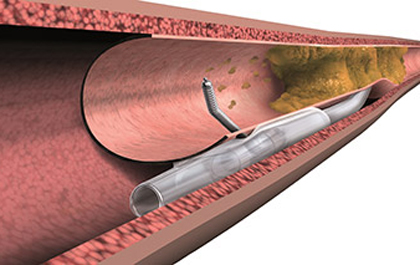
 estrategia de revascularización

The long-term clinical benefit of recanalization and PCI or TO artery bypass graft remains nuclear. 

This is a sub-study of the SYNTAXES (Synergy Between PCI With Taxus and Cardiac Surgery Extended Survival) that randomized patients with at least one TO. 

Of 1800 patients randomized to PCI vs surgery, 460 presented at least one TO.

TO revascularization, or its absence, did not affect mortality at 10 years, regardless the strategy (PCI Branch: 29.9% vs. 29.4%; p = 0.982 and surgery branch: 28.0% vs. 21.4%; p = 0.330).


Read also: Major Cause of Myocardial Injury by COVID-19.


Neither were there differences between recanalization or revascularization if TO was to the left main or to the anterior descending artery (34.5% vs. 26.9%; p = 0.837). 

Conclusion

Recanalization with PCI or revascularization with surgery of a total occlusion does not affect mortality at 10 years, irrespective of strategy type or TO location. 

These data support the contemporary practice claiming recanalization should be offered in specialized high-volume centers to patients with angina refractory to optimal medical treatment and with confirmed myocardial viability. 

Original Title: Mortality 10 Years After Percutaneous or Surgical Revascularization in Patients With Total Coronary Artery Occlusions.

Reference: Hideyuki Kawashima et al. J Am Coll Cardiol. 2021 Feb 9;77(5):529-540. doi: 10.1016/j.jacc.2020.11.055.


Subscribe to our weekly newsletter

Get the latest scientific articles on interventional cardiology

More articles by this author

ACC 2026 | DKCRUSH VIII: IVUS or angiography to guide PCI in complex coronary bifurcations

Intracoronary imaging guidance has become an established recommended strategy in complex coronary lesions. In the specific setting of complex bifurcations, uncertainty remained regarding the...

ACC 2026 | OPTIMAL: IVUS Guidance in PCI of the Unprotected Left Main Coronary Artery

Percutaneous coronary intervention (PCI) is considered an equivalent alternative to coronary artery bypass surgery in patients with left main coronary artery (LMCA) stenosis and...

ACC 2026 | IVUS-CHIP Trial: Intravascular ultrasound–guided versus angiography-guided complex PCI

Optimization of percutaneous coronary intervention (PCI) in complex lesions remains a relevant clinical challenge. In this context, the IVUS-CHIP trial was designed to evaluate...

ACC 2026 | ALL-RISE Trial: Coronary Physiological Assessment Using FFRangio

Coronary physiological assessment using pressure-wire techniques (FFR/iFR) carries a Class IA recommendation in ACC/AHA guidelines; however, its use remains limited due to factors such...

LEAVE A REPLY

Please enter your comment!
Please enter your name here

Related Articles

SOLACI Sessionsspot_img

Recent Articles

Experience with the intra-annular self-expanding Navitor valve: data from the STS/ACC TVT registry

The expansion of TAVI, with the introduction of new-generation devices, has prioritized not only periprocedural safety, but also the preservation of coronary access, more...

Therapeutic strategies in carotid free-floating thrombus: evidence and controversies

Carotid free-floating thrombus (cFFT) is a rare entity with a high embolic risk, associated with acute neurological events such as stroke or transient ischemic...

The Two Sides of the Coin: What Do CHAMPION-AF and CLOSURE-AF Teach Us About Left Atrial Appendage Closure?

Letter to the editor: Juan Manuel Pérez Asorey Percutaneous left atrial appendage closure (LAAO) is currently going through one of the most interesting stages of...

