



Hand Function after Distal Radial Access: Is it Safe?

The benefit of the transradial approach in percutaneous interventions is well known. Its main limitation is radial artery occlusion (RAO) which would compromise the artery for future use in percutaneous procedures. Even though it is clinically silent, reported cases might reach 33%. 
Función de la mano luego del acceso radial distal, ¿es seguro?

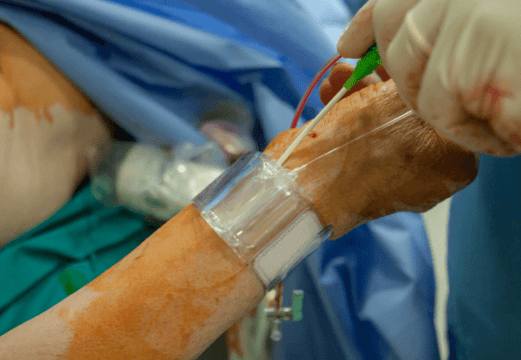
More recently, the distal radial access (DRA) has surged as an alternative to reduce RAO. However, its safety and potential to produce negative effects in hand function have not been studied yet. 

The aim of this prospective, multicenter, cohort study was to assess hand function at long term in patients treated with DRA for coronary procedures. 

Multiple outcomes were presented to assess hand dysfunction, including coordination questionnaires, dexterity, strength, and sensation tests up to 12-month followup. 

The study looked at 313 patients. Mean age was 66 and they were mostly men. 22% presented prior radial access. As regards procedure characteristics, 54% of DRA was left, ultrasound was used to guide puncture in 85 % of cases, and they were mostly diagnostic procedures. DRA failed in 2.9% of cases. 

Read also: FFR and IFR: Are We Talking About the Same Thing?

DRA showed no hand function deterioration according to the questionnaires for subjective and objective assessment and was even associated to less pain and <1% RAO rate.  

Conclusion 

The distal radial access was not associated with worse hand function. On the contrary, it was associated to lower complications rate with good tolerance to the procedure. 

Dr. Andrés Rodríguez
Member of the editorial board of SOLACI.org.

Original Title: International Hand Function Study Following Distal Radial Access The RATATOUILLE Study.

Reference: Gregory A. Sgueglia, MD et al J Am Coll Cardiol Intv 2022.


Subscribe to our weekly newsletter

Get the latest scientific articles on interventional cardiology

More articles by this author

Comparison of strategies: NMA of IVUS, OCT, or angiography in complex lesions

Percutaneous coronary intervention (PCI) in complex lesions continues to represent a technical challenge in contemporary interventional cardiology. Angiography, although it remains the most widely...

Dynamic Coronary Roadmap: does it really help reduce contrast use?

Contrast-induced nephropathy remains a relevant complication of percutaneous coronary interventions (PCI), particularly in patients with multiple comorbidities and complex coronary anatomies. Dynamic Coronary Roadmap...

Long-Term Cardiovascular Risk in Patients With ANOCA: A Clinical Reality to Consider?

Chronic stable angina (CSA) remains one of the most frequent reasons for referral to diagnostic coronary angiography (CAG). In a substantial proportion of these...

Perforation Management in Bifurcations: Bench Testing of Bailout with Covered Stents

Coronary perforations during PCI are one of the most dreaded complications in interventional cardiology, especially in bifurcations. Though rate, this critical situation requires an...

LEAVE A REPLY

Please enter your comment!
Please enter your name here

Related Articles

SOLACI Sessionsspot_img

Recent Articles

VECTOR: First Percutaneous Aorto-Coronary Bypass Case, a New Conceptual Approach

Coronary obstruction represents one of the most severe complications associated with transcatheter aortic valve implantation, particularly in valve-in-valve scenarios involving surgical bioprostheses, narrow aortic...

Comparison of strategies: NMA of IVUS, OCT, or angiography in complex lesions

Percutaneous coronary intervention (PCI) in complex lesions continues to represent a technical challenge in contemporary interventional cardiology. Angiography, although it remains the most widely...

Is upper-limb aerobic training an effective alternative to lower-limb exercise in peripheral artery disease?

Peripheral artery disease is associated with impaired functional capacity, reduced walking distance, and poorer quality of life, and structured exercise is a class I...

