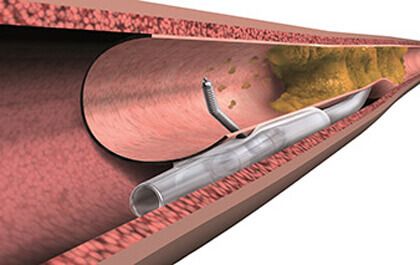
Roughly 20% or coronary angiographies show some form of chronic total occlusion (CTO), and this figure is twice as high for diabetic patients or those with cardiac failure and reduced ejection fraction (EF). CTO percutaneous intervention (PCI) has experienced a significant growth thanks to the development of new techniques and dedicated material. However, a considerable number of these patients might face procedure related complications, such as side branch perforation or difficult vascular access, especially when opting for a dual approach.
The purpose of this study is to report on the technical success and complications rate according to the European Registry of Chronic Total Occlusions (ERCTO).
Data from 8673 CTO PCI procedures done between January 2021 and October 2022 were looked at. Outcomes were stratified according to procedure volume into high and medium volume. Patient selection for PCI was based on symptoms, viability and induced ischemia. As to asymptomatic patients, the study only included those with severe ischemia or reduced EF, with a viable myocardium.
The right coronary artery was the most treated vessel (55.9%), followed by the anterior descending (26.4%) and the circumflex (14.9%). Mean J-CTO score was 2.2±1.3, with mean lesion length 27.1±16.9 mm. 73% of cases were treated with an antegrade approach, while the remaining 27% opted for the retrograde approach. 6% of the antegrade and 44% of the retrograde patients were treated with dissection and reentry (ADR and RDR respectively).
Read also: Should We Treat Obstructive Coronary Artery Disease in TAVI?
Mean technical success (defined as residual stenosis <30% with TIMI flow III) was 89.1% and was significantly higher in antegrade approach patients (92.8% vs. 79.3%; p<0.001). a dual approach was used in 75.8% of patients, and the most common combination was transradial and transfemoral (33.9%), followed by dual transradial (25.8%). In bifurcation cases (26.1%), a single stent was used most predominantly, in 82%.
When comparing strategies, the retrograde approach initially presented higher J-CTO, longer stents (65.8±44.6 mm vs. 54.5±34.1 mm; p<0.001), longer procedural time (140 min [IQR 106.8-180.0] vs. 70 min [IQR 49-103]; p<0.001) and more contrast (250 ml [IQR 180-350] vs. 180 ml [IQR 120-250]; p<0.001).
The use of micro-catheters was high (98% of procedures) and the Gaia guidewires presented the best crossing index. 1606 severely calcified lesions were reported by the registry, and a plaque modifying device was used in 24% of cases (Rotablator in 75% of these).
Read also: Left Atrial Appendage Closure and Concomitant Transcatheter Intervention: Can We?
Major adverse cardiac and cerebrovascular events (MACCE) occurred in 1.7% of cases, and the most frequent was coronary perforation (3.8% of procedures), followed by tamponade (0.7%), peri-procedural MI (0.5%) and death (0.3%).
The retrograde approach showed high MACCE (3.1% vs. 1.2%; p=0.018), perforation index (8.3% vs. 2.1%; p<0.001) and major vascular complications (1.5% vs. 0.5%; p<0.001).
Logistic regression identified the retrograde approach (OR 1.89, 95% CI: 1.23-2.83; p=0.003), female sex (OR 1.89, 95% CI: 1.23-2.83; p=0.003), age and mean procedure volume (OR 1.49, 95% CI: 1.01-2.19; p=0.041) as independent risk factors of periprocedural MACCE. The transradial approach was found “protecting”, with reduced events rate (OR 0.69, 95% CI: 0.47-1.00; p=0.049).
Conclusions
These registry outcomes suggest a remarkable improvement in technique, relevant to this cohort, with better technical success and lower MACCE in operators with high procedure volume. The availability of specialized, dedicated devices might have contributed to the observed technical success.

Dr. Omar Tupayachi.
Member of the Editorial Board of SOLACI.org.
Original Title: Contemporary outcomes of chronic total occlusion percutaneous coronary intervention in Europe: the ERCTO registry.
Reference: Vadalà, G., Galassi, A. R., Werner, G. S., Sianos, G., Boudou, N., Garbo, R., Maniscalco, L., Bufe, A., Avran, A., Gasparini, G. L., La Scala, E., Ladwiniec, A., Saghatelyan, M., Goktekin, O., Gorgulu, S., Reifart, N., Agostoni, P., Rathore, S., Ayoub, M., … on behalf of the EURO CTO investigators. (2024). Contemporary outcomes of chronic total occlusion percutaneous coronary intervention in Europe: the ERCTO registry. EuroIntervention: Journal of EuroPCR in Collaboration with the Working Group on Interventional Cardiology of the European Society of Cardiology, 20(3), e185–e197. https://doi.org/10.4244/eij-d-23-00490.
Subscribe to our weekly newsletter
Get the latest scientific articles on interventional cardiology