






Transcatheter aortic valve replacement (TAVR) is a well-established option to treat elderly patients with severe symptomatic aortic valve stenosis. Technical advances and device development continue to play a crucial role in TAVR efficacy and safety improvement. Among vascular access sites, the trasfemoral approach has been shown superior. However, vascular complications continue to significantly impact the associated hospital stay, morbidity and mortality.
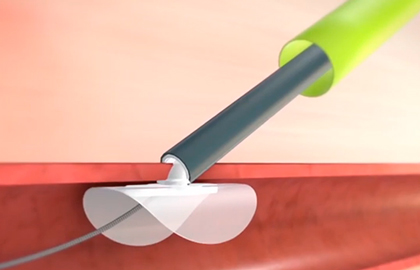
At present, there are several vascular closure devices available. However, evidence on their safety and efficacy is still limited. Observational studies have shown combining suture and plug devices (such as the PROGLIDE and AngioSeal) results effective.
Objective: Comparing Suture against Suture/Plug Combination for Femoral Closure
The aim of this prospective, multicenter study was to compare the efficacy of a combined strategy of vascular closure based on sutures and plug vs. the exclusive use of a suture system to achieve homeostasis after transfemoral TAVR.
Primary end point was a combination of major and minor access site complications assessed according to VARC-3. Secondary end point included time to hemostasis, ≥2 VARC -3 bleeding and all-cause mortality at 30 days.
454 patients were randomized into 2 groups: 230 were assigned to the suture/plug group and 224 to sutures alone. Mean patient age was 80, and they were mostly men. Mean EUROSCORE II was 4,4%, and 9,3% presented peripheral vascular disease.
Results: Efficacy and Safety of Vascular Closure Devices after Transfemoral TAVR
The primary end point occurred in 27% (62/230) of suture/plug patients vs 54% (121/224) of suture only patients (RR 0,55; CI 95%: 0,44-0,68; p < 0,001). Time to hemostasis was significantly lower among suture/plug vs suture only patients (108 ± 208 s vs 206 ± 171 s; p < 0,001).
At 30 days, bleeding VARC-3 ≥2 occurred less frequently among suture/plug patients vs. suture alone (6,2% vs 12,1%; RR 0,66; CI 95%: 0,43-1,02; p = 0,032), even though this difference was not statistically significant. Neither were there significant differences in 30-day mortality between the groups.
Conclusion
The combination of suture/plug based vascular closure devices was shown superior to the exclusive use of sutures for transfemoral access site closure after TAVR.
Original Title: Comparison of strategies for vascular ACCESS closure after transcatheter aortic valve 2 implantation: the ACCESS-TAVI randomized trial.
Reference: Tobias Rheude, MD et al European Heart Journal, ehae784.
Subscribe to our weekly newsletter
Get the latest scientific articles on interventional cardiology



