



Modelos europeos de telemedicina, como el servicio finlandés Medilux, permiten realizar consultas médicas online mediante un cuestionario clínico, sin acudir a una consulta presencial.

Left Atrial Appendage Closure in Spain: Sustained Growth and Favorable Real-World Outcomes

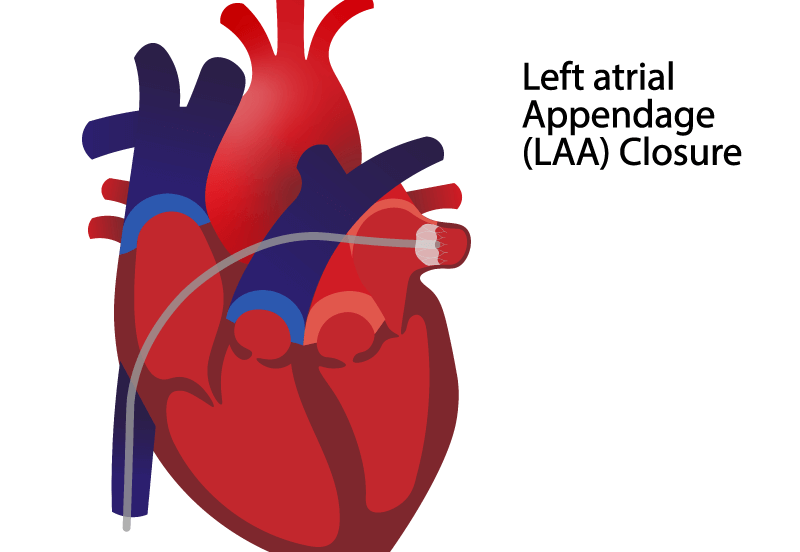
Oral anticoagulation remains the standard treatment for stroke prevention in patients with atrial fibrillation. However, many patients have a high bleeding risk or contraindications to long-term anticoagulant therapy. In this context, percutaneous left atrial appendage closure (LAAC) has become an established therapeutic alternative for selected patients. The present study analyzed temporal trends and outcomes of LAAC in Spain using the National Health System database between 2016 and 2022.
The primary endpoint was in-hospital mortality and the incidence of in-hospital adverse events. Secondary endpoints included 30-day cardiovascular readmissions and predictors associated with complications.

A total of 3,786 patients underwent LAAC, with a mean age of 74 years; 63% were male. The procedure showed sustained growth, increasing from 0.6 to 2.3 interventions per 100,000 inhabitants between 2016 and 2022, representing an annual increase of 23% (IRR=1.23; 95% CI: 1.17–1.28; p<0.001). Additionally, 77.6% of procedures were performed electively.

In-hospital mortality was 1%. The overall adverse event rate reached 14%, with blood transfusion being the most frequent complication (11.5%), followed by vascular complications (2.2%), acute kidney injury (1.9%), and stroke (0.6%). Thirty-day cardiovascular readmissions occurred in 3.5% of patients.

Non-elective procedures were associated with a significantly higher incidence of adverse events compared with elective procedures (24.5% vs. 11.2%; p<0.001). Likewise, a higher HAS-BLED score was independently associated with increased in-hospital mortality (OR=2.55; 95% CI: 1.73–3.74; p<0.001) and a greater risk of complications (OR=1.82; 95% CI: 1.58–2.10; p<0.001).

Read also: HERA-TAVI: Intra-Annular vs Supra-Annular Valves in TAVI.

Another relevant finding was that high-volume centers, defined as those performing more than 120 procedures, experienced fewer adverse events than lower-volume centers.

Interestingly, the cohort exhibited relatively low HAS-BLED scores, suggesting that in routine clinical practice in Spain, left atrial appendage closure has expanded to patients with moderate bleeding risk and not exclusively to those with absolute contraindications to anticoagulation.

Conclusion: Left Atrial Appendage Closure Demonstrated a Favorable Safety Profile in Spain

In conclusion, percutaneous left atrial appendage closure experienced sustained growth in Spain over recent years, accompanied by low in-hospital mortality and a favorable safety profile. The best outcomes were observed in elective procedures and in high-volume centers, reinforcing the importance of appropriate patient selection and institutional experience to optimize clinical results.


Original Title: Temporal Trends and Outcomes of Left Atrial Appendage Closure. A National Population-Based Study.


Subscribe to our weekly newsletter

Get the latest scientific articles on interventional cardiology

More articles by this author

HERA-TAVI: Intra-Annular vs Supra-Annular Valves in TAVI

The HERA-TAVI study is an international multicenter registry that compared the clinical and hemodynamic outcomes of contemporary self-expanding transcatheter heart valves with intra-annular (IA)...

DOUBLE-CHOICE: Lower Pacemaker Implantation Rates with ACURATE neo2 Compared with Evolut in Patients Undergoing TAVI

The DOUBLE-CHOICE trial is a multicenter, randomized, controlled study conducted in Germany to evaluate the performance of next-generation transcatheter heart valves and different anesthesia...

GLUCO-TAVI | Can Glucocorticoids Reduce the Need for Permanent Pacemaker Implantation After TAVI?

Despite the expansion of transcatheter aortic valve implantation (TAVI) indications, cardiac conduction disturbances (CCD) and the need for permanent pacemaker implantation (PPI) remain the...

EuroPCR 2026 | TAVI in Women: Do Supra-Annular Valves Offer a True Hemodynamic Advantage?

Women represent a particularly challenging population for TAVI, as they often have smaller aortic annuli, greater frailty, and an increased risk of prosthesis-patient mismatch....

LEAVE A REPLY

Please enter your comment!
Please enter your name here

Related Articles

SOLACI Sessionsspot_img
Jornadas Guatemala 2026

Recent Articles

HERA-TAVI: Intra-Annular vs Supra-Annular Valves in TAVI

The HERA-TAVI study is an international multicenter registry that compared the clinical and hemodynamic outcomes of contemporary self-expanding transcatheter heart valves with intra-annular (IA)...

DOUBLE-CHOICE: Lower Pacemaker Implantation Rates with ACURATE neo2 Compared with Evolut in Patients Undergoing TAVI

The DOUBLE-CHOICE trial is a multicenter, randomized, controlled study conducted in Germany to evaluate the performance of next-generation transcatheter heart valves and different anesthesia...

GLUCO-TAVI | Can Glucocorticoids Reduce the Need for Permanent Pacemaker Implantation After TAVI?

Despite the expansion of transcatheter aortic valve implantation (TAVI) indications, cardiac conduction disturbances (CCD) and the need for permanent pacemaker implantation (PPI) remain the...

