






Tricuspid regurgitation (TR) has been associated with increased mortality and functional deterioration. Even though the current guidelines recommend tricuspid valve surgery, supporting evidence is still limited, and studies so far have shown discouraging results. Whatsmore, the poor response to optimal medical treatment (OMT) in attempting to stop the natural progression of this disease, has prompted the cardiovascular community to explore safer transcatheter interventions.
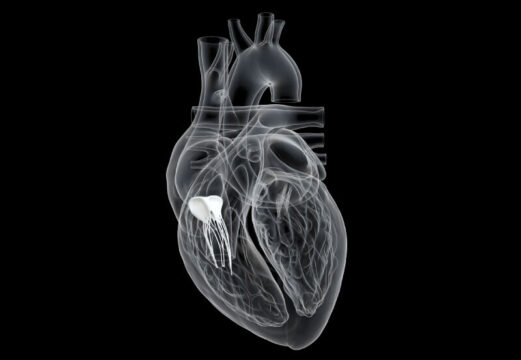
Preliminary studies on effectiveness have shown transcatheter tricuspid valve replacement (TTVR) significantly reduces TR and improves patient functional status. In this context, the TRAVEL trial (Transcatheter Right Atrioventricular Valve Replacement with LuX-Valve) —a prospective multicenter study conducted in eight centers in China— assessed the clinical performance of the LuX-Valve TTVR system in patients with severe symptomatic TR and high surgical risk for tricuspid valve (TV) surgery.
The aim of this article is to present the one year outcomes of the TRAVEL study with the LuX valve.
The primary outcome was all cause mortality and hospitalization for cardiac failure at one year.
The study looked at 126 patients, mean age 65, mostly women. They were all in NYHA functional class III or IV and presented high surgical risk, with mean STS 9.2. At one year, all-cause mortality resulted 10.3%, and 4.0% of patients required hospitalization for cardiac failure.
Read also: Renal Denervation, 24-Month Evolution.
TR was reduced to mild or none in 95.2% of cases (p < 0,001), with a reduction in right atrial stroke volume (38.3 ± 21.7 ml; p < 0.001) and right ventricular end-systolic diameter (6.4 ± 2.3 mm; p < 0.001). 79.8% of patients reached NYHA functional class I or II (p < 0.001), and the 6-minute walk distance increase by 71.3 ± 42.8 meters (p < 0,001).
Conclusion
The one-year outcomes of the TRAVEL study showed the LuX valve is a viable and effective alternative for treating severe TR patients. The procedure showed high success rate, which translated into a significant and sustained reduction in TR severity. Lower rates of mortality and hospitalization for CF, together with improved functional status, suggest the LuX valve represents a promising therapeutic option for patients at high surgical risk, with limited choice.
Original Title: Transcatheter Tricuspid Valve Replacement With the Novel System 1-Year Outcomes From the TRAVEL Study.
Reference: Xiangbin Pan, MD, PHD et al JACC CardiovascInterv. 2025; 18: 1276–1285.
Subscribe to our weekly newsletter
Get the latest scientific articles on interventional cardiology



 se asocia con un aumento de la mortalidad y un deterioro del estado funcional.)