






The evolution of stent technology—including new scaffold designs, thinner struts, and more biocompatible polymers—has brought about an emerging concern: the late loss of structural support, also known as chronic recoil.
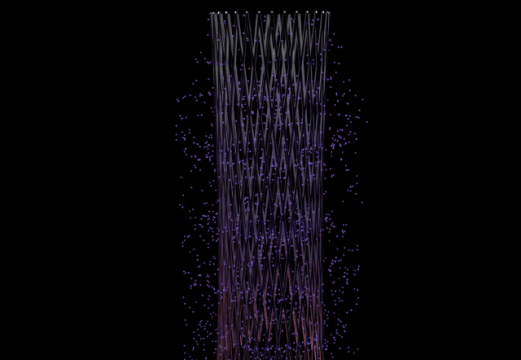
This phenomenon, which was rarely reported in the era of first-generation stents, appears to have a non-negligible incidence with current devices. In response to this, Sugizaki et al. conducted a single-center observational study (at St. Francis Hospital in New York) using optical coherence tomography (OCT) intravascular imaging to quantify the phenomenon and assess its clinical impact.
The study included 265 de novo lesions (in 252 patients), all treated with second- or newer-generation stents. Chronic recoil was defined as either a >10-% reduction in stent volume over a 10-mm segment or a ≥10-% reduction in luminal area in cases of stent fracture or deformation.
Chronic recoil was identified in 21.5% of lesions that required target lesion revascularization (TLR), compared to only 7.8% of lesions that did not. Among the lesions with recoil, 41.9% were associated with stent fracture or deformation.
In a multivariate analysis, the independent predictors of chronic recoil were greater calcium arc (odds ratio [OR] 1.64, 95% confidence interval [CI]: 1.17–2.29), greater baseline stent expansion (every 10-% increase: OR 1.41, 95% CI: 1.19–1.83), and higher stent eccentricity index (OR 0.61, 95% CI: 0.39–0.92).
Recoil was significantly associated with the need for TLR. In the predictive model for TLR, independent factors included smaller stent area at follow-up (OR 3.86, 95% CI: 1.57–9.48), increase in intra-stent tissue area (OR 4.26, 95% CI: 2.83–6.41), and lower final baseline minimum stent area (MSA) (OR 0.38, 95% CI: 0.28–0.51).
Read also: iVAC2L: New Contribution to Ventricular Assist Devices in High Risk PCIs.
Notably, in 58% of the cases with recoil there was no evidence of fracture or structural deformation, highlighting the usefulness of OCT in detecting this subclinical phenomenon. These findings underscore the importance of achieving uniform and complete stent expansion during the procedure, especially in cases of extensive calcified plaque or eccentric lesions.
Conclusions
Chronic stent recoil is a significant mechanism of target lesion revascularization with meaningful clinical consequences. This study highlights the importance of morphological assessment with OCT to improve long-term outcomes of percutaneous coronary intervention (PCI).
Original Title: Factors Associated With Chronic Stent Recoil and its Impact on Revascularization.
Reference: Sugizaki Y, Chen YW, Tsukui T, Kido T, Matsumura M, Shlofmitz E, Sosa FA, Shin D, Cannata M, Caron E, Ciftcikal Y, Moses JW, Khalique OK, Cohen DJ, Mintz GS, Shlofmitz RA, Jeremias A, Ali ZA, Maehara A. Factors Associated With Chronic Stent Recoil and its Impact on Revascularization: A Serial Optical Coherence Tomography Study. JACC Cardiovasc Interv. 2025 May 12;18(9):1133-1144. doi: 10.1016/j.jcin.2025.01.432. Epub 2025 Apr 23. PMID: 40272344.
Subscribe to our weekly newsletter
Get the latest scientific articles on interventional cardiology



