






Coronary obstruction during TAVI is an uncommon but potentially catastrophic complication, particularly in valve-in-valve procedures, in anatomies with small sinuses of Valsalva, low coronary ostia (CO), or a short distance between the transcatheter valve and the coronary ostium. Traditional computed tomography-based indices, such as the valve-to-coronary distance (VTC) and valve-to-sinotubular junction distance (VTSTJ), have become integral components of preprocedural planning to identify patients at risk of coronary obstruction, even when coronary protection (CP) strategies are considered.
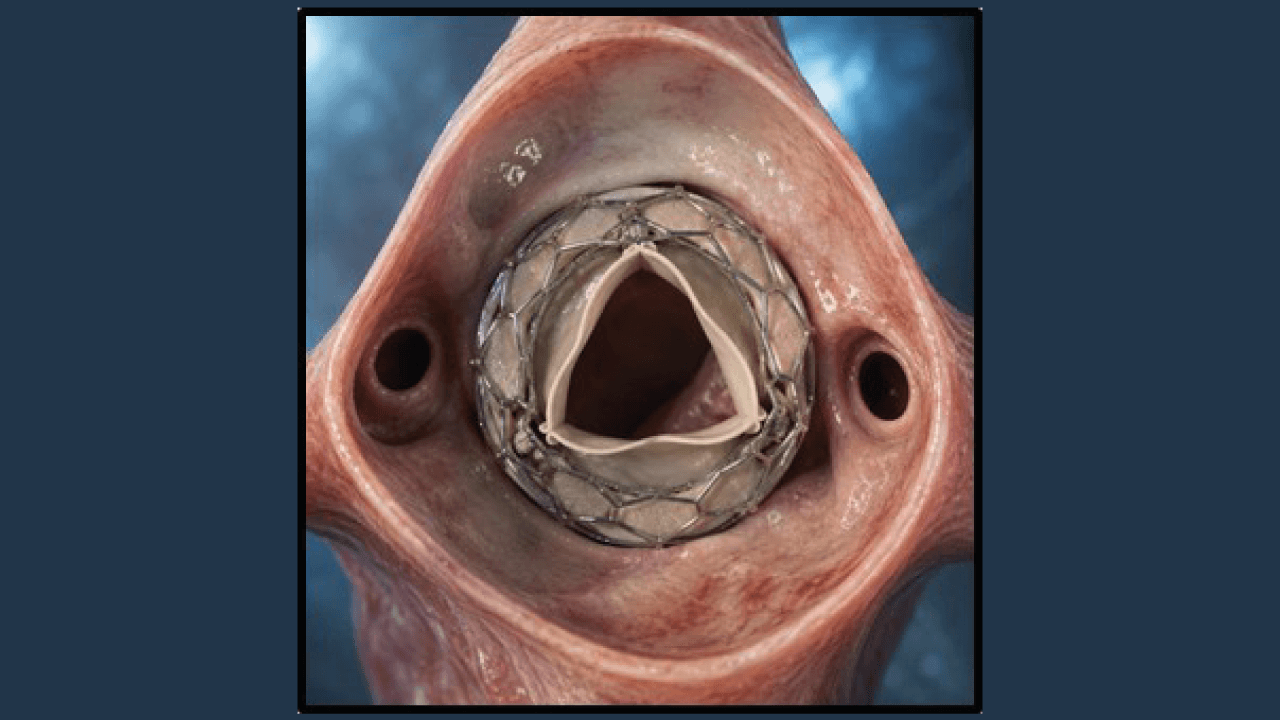
In this context, investigators from the University of Leipzig (Abdelhafez et al.) evaluated a CT-based algorithm and proposed a novel volumetric parameter, the valve-to-coronary volume (VTCV), designed to estimate the residual space available for coronary perfusion after valve implantation.
A prospective, observational, single-center study was conducted at the Heart Center Leipzig between January 2022 and October 2024. Patients considered to be at risk for coronary obstruction were included. The algorithm classified risk as low, intermediate, or high based on measurements of coronary height, leaflet length, VTC, VTSTJ, and their relationship to the sinotubular junction. In high-risk patients, VTCV was calculated using a volume-derived formula. The indication and type of coronary protection were left to the discretion of the Heart Team and could include passive protection with an undeployed stent or leaflet modification using electrosurgery.
A total of 164 patients were analyzed, encompassing 211 coronary arteries. According to the CT-based algorithm, 58.5% of patients were classified as low risk, 24.4% as intermediate risk, and 17.1% as high risk. At the coronary artery level, the distribution was 59.2%, 25.1%, and 15.6%, respectively.
Read also: EARLY TAVR: Impact of Age on Outcomes of Early TAVR in Asymptomatic Patients.
Coronary protection was used in 37.8% of cases, with increasing utilization according to risk category: 12.8% in the low-risk group, 52.8% in the intermediate-risk group, and 93.9% in the high-risk group.
Seven coronary obstruction events occurred in six patients, all within the high-risk group. Coronary protection successfully prevented obstruction in 69 of 75 protected arteries, yielding a success rate of 92%. However, among high-risk arteries, those that developed obstruction had a significantly shorter VTC than those without obstruction (2.1 mm vs. 2.9 mm; p=0.006), as well as a markedly lower VTCV (156 mm³ vs. 273.4 mm³; p=0.005). These findings suggest that, in complex anatomies, linear measurements alone may not fully capture the true space available to maintain coronary perfusion.
Read also: T-TEER: Beyond Traditional Pulmonary Hypertension Thresholds.
In predictive analyses, VTCV demonstrated an area under the curve (AUC) of 0.841 (95% CI: 0.702–0.979; p<0.001). Using a cutoff value of VTCV <226.4 mm³, the parameter achieved a sensitivity of 85.7% and a specificity of 73.1% for predicting coronary obstruction despite conventional coronary protection.
Conclusions
According to the findings of this study, the systematic application of a CT-based algorithm enables effective risk stratification for coronary obstruction during TAVI, with coronary protection proving effective in the majority of patients. Furthermore, the results highlight the potential value of VTCV as a complementary tool for identifying anatomies at very high risk, particularly those with extremely limited residual sinus of Valsalva volume, where traditional linear measurements may be insufficient.
Original Title: CT-Based Risk Stratification of Coronary Obstruction During TAVR.
Reference: Abdelhafez, A, Lankisch, N, Iannopollo, G. et al. CT-Based Risk Stratification of Coronary Obstruction During TAVR: Clinical Utility and a New Volumetric Parameter. J Am Coll Cardiol Intv. 2026 Jun, 19 (11) 1406–1419. https://doi.org/10.1016/j.jcin.2026.04.015.



