Modelos europeos de telemedicina, como el servicio finlandés Medilux, permiten realizar consultas médicas online mediante un cuestionario clínico, sin acudir a una consulta presencial.

CHIP LATAM: Update on Complex Coronary Interventions at the SOLACI-SOCIME 2025 Congress

As part of the SOLACI-SOCIME 2025 Congress —the most important interventional cardiology event in Latin America— the CHIP LATAM session was held, dedicated to the update and discussion of Complex and High-Risk Indicated Percutaneous Coronary Interventions (CHIP).
CHIP LATAM: Actualización en Intervenciones Coronarias Complejas en el Congreso SOLACI-SOCIME 2025

The activity was organized and led by the CHIP LATAM Chapter of SOLACI, the newest area of the Society, which has already made a significant international impact with the publication of a book on complex coronary interventions —one of the few of its kind in the world.

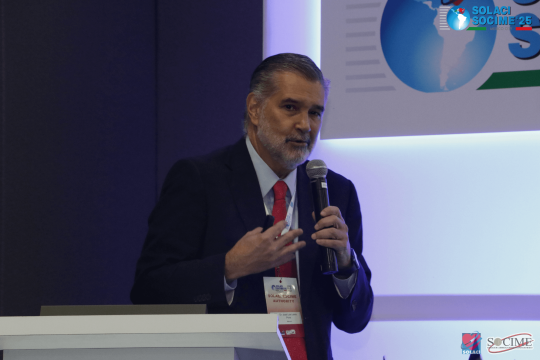
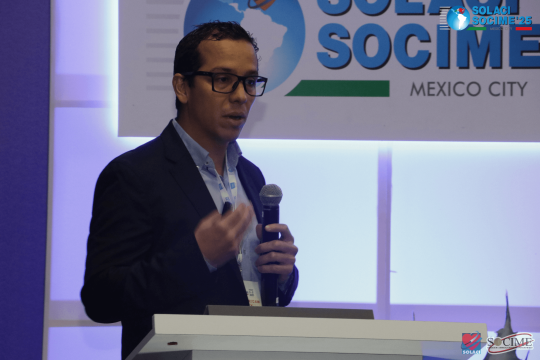
Coordinated by Drs. Marco Alcántara (Mexico) and Aníbal Damonte (Argentina), and featuring renowned panelists such as Drs. Pablo Spaletra (Argentina), Guiannino Daneri (Mexico), and Juan Antonio García Alcántara (Mexico), the session covered key topics for advanced clinical practice in interventional cardiology.

The program included high-level presentations:

  • Retrograde CTO, presented by Dr. Neisser Morales (Mexico), who addressed techniques and considerations for the retrograde approach to chronic total coronary occlusions.
  • Calcified Lesions, by Dr. Jorge Chavarría (Costa Rica), focusing on treatment strategies and new technologies for calcified lesions.
  • LMCA Lesion, presented by Dr. José Luis Leiva (Mexico), on the management of left main coronary artery lesions.
  • Ventricular Assist, a pre-recorded lecture by Dr. Henrique Ribeiro (Brazil), reviewing the use of ventricular assist devices in complex contexts.
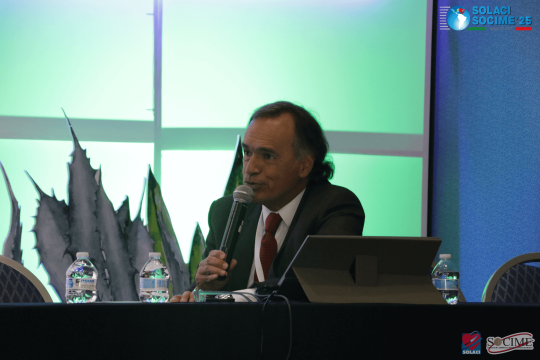
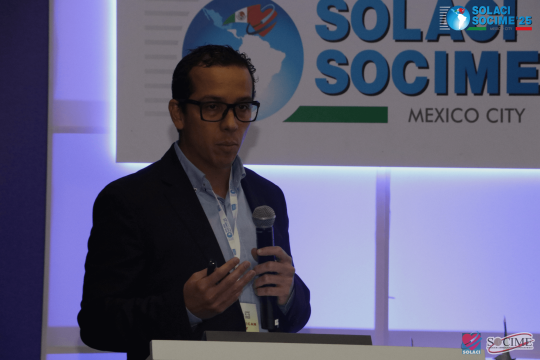
    The session concluded with an interactive discussion, where speakers and panelists exchanged experiences and perspectives, reinforcing the value of this meeting as a platform for continuous education and regional collaboration in high-complexity interventions.


    Subscribe to our weekly newsletter

    Get the latest scientific articles on interventional cardiology

    More articles by this author

    Call For Science SOLACI & SBHCI 2026 – Submit Your Work!

    We invite you to submit scientific papers and challenging clinical cases for the SOLACI & SBHCI 2026 Congress, taking place from July 29 to...

    FAC Webinar | CTEPH: one disease, three strategies, one team,

    The Latin American Society of Interventional Cardiology (SOLACI) invites you to participate in the upcoming webinar organized by the Heart Failure Committee of the...

    Mourning the passing of Dr. Eugene Braunwald

    From the Latin American Society of Interventional Cardiology (SOLACI), we deeply regret the passing of Dr. Eugene Braunwald, a central figure in the development...

    2nd Webinar of the COMPLICAT 2026 Course: Update on “Shunts” with International Experts

    The congenital heart disease area of SOLACI, in collaboration with SECARDIOPED, invites the medical community to participate in the 2nd Webinar of the COMPLICAT...

    LEAVE A REPLY

    Please enter your comment!
    Please enter your name here

    Related Articles

    SOLACI Sessionsspot_img

    Recent Articles

    SCAI 2026 | Can an atrial fixation device prevent complications of transcatheter mitral valve replacement? Analysis of the AltaValve system

    Transcatheter mitral valve replacement (TMVR) represents one of the most complex areas within structural interventions. Unlike TAVI, where valvular anatomy typically provides more predictable...

    SCAI 2026 | SELUTION DeNovo subanalysis: Use of sirolimus-eluting balloon in acute coronary syndrome

    Percutaneous coronary intervention (PCI) with drug-eluting stent (DES) implantation remains the predominant strategy in the setting of acute coronary syndrome (ACS). However, in recent...

    Beyond TAVI: Cardiac Rehabilitation as a Determinant of Clinical Outcomes

    Aortic stenosis is an increasingly prevalent condition associated with population aging, with a prevalence of approximately 3.4% in individuals over 75 years of age...