CHIP LATAM: Update on Complex Coronary Interventions at the SOLACI-SOCIME 2025 Congress

As part of the SOLACI-SOCIME 2025 Congress —the most important interventional cardiology event in Latin America— the CHIP LATAM session was held, dedicated to the update and discussion of Complex and High-Risk Indicated Percutaneous Coronary Interventions (CHIP).
CHIP LATAM: Actualización en Intervenciones Coronarias Complejas en el Congreso SOLACI-SOCIME 2025

The activity was organized and led by the CHIP LATAM Chapter of SOLACI, the newest area of the Society, which has already made a significant international impact with the publication of a book on complex coronary interventions —one of the few of its kind in the world.

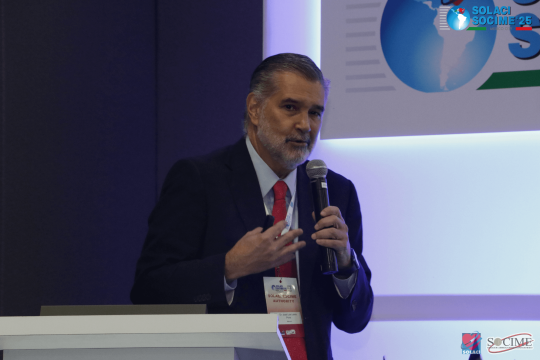
Coordinated by Drs. Marco Alcántara (Mexico) and Aníbal Damonte (Argentina), and featuring renowned panelists such as Drs. Pablo Spaletra (Argentina), Guiannino Daneri (Mexico), and Juan Antonio García Alcántara (Mexico), the session covered key topics for advanced clinical practice in interventional cardiology.

The program included high-level presentations:

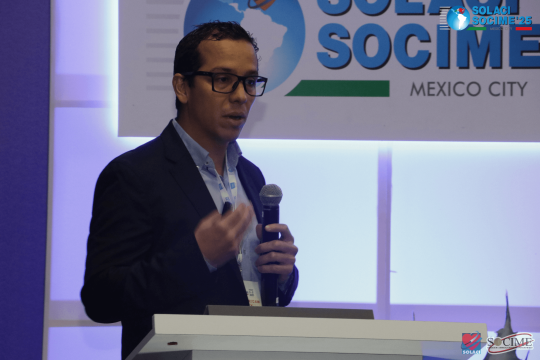
  • Retrograde CTO, presented by Dr. Neisser Morales (Mexico), who addressed techniques and considerations for the retrograde approach to chronic total coronary occlusions.
  • Calcified Lesions, by Dr. Jorge Chavarría (Costa Rica), focusing on treatment strategies and new technologies for calcified lesions.
  • LMCA Lesion, presented by Dr. José Luis Leiva (Mexico), on the management of left main coronary artery lesions.
  • Ventricular Assist, a pre-recorded lecture by Dr. Henrique Ribeiro (Brazil), reviewing the use of ventricular assist devices in complex contexts.
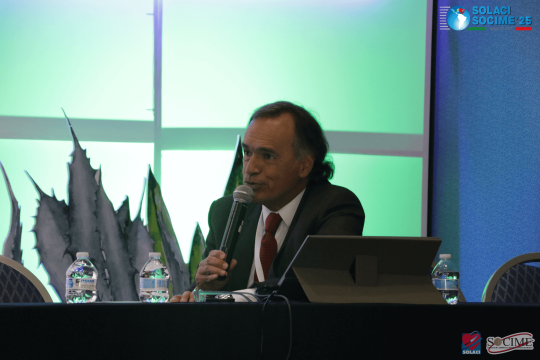
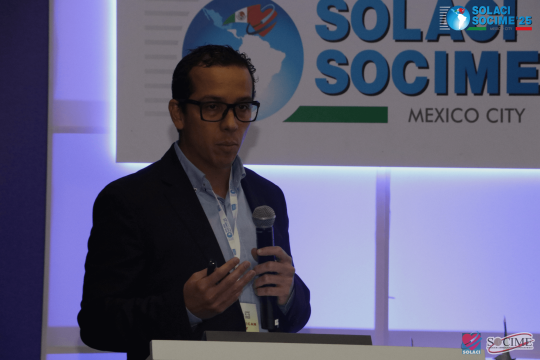
    The session concluded with an interactive discussion, where speakers and panelists exchanged experiences and perspectives, reinforcing the value of this meeting as a platform for continuous education and regional collaboration in high-complexity interventions.


    Subscribe to our weekly newsletter

    Get the latest scientific articles on interventional cardiology

    More articles by this author

    V International Course on Cardiovascular Interventionism – SOLACI Scientific Endorsement

    The Latin American Society of Interventional Cardiology (SOLACI) proudly grants its scientific endorsement to the V International Course on Cardiovascular Interventionism, an important academic...

    Guatemala Sessions 2026 – Young Interventional Cardiologists Contest – Submit Your Case

    The call for applications to participate in the Young Interventional Cardiologists Competition at the Guatemala 2026 Regional Sessions is now open. The event will...

    Watch Again: Clinical Implications of Structural Heart Interventions — TAVI and MitraClip in Daily Practice

    The recording of the webinar “Structural Interventions: TAVI and MitraClip in Daily Practice” is now available on the SOLACI YouTube channel. The activity was...

    06/03 | SOLACI Technicians & Nurses Webinar – Clinical Impact of Structural Interventions: TAVI and MitraClip in Current Practice

    The Latin American Society of Interventional Cardiology (SOLACI), through its Technicians and Nurses Department, invites you to participate in a new scientific webinar entitled...

    LEAVE A REPLY

    Please enter your comment!
    Please enter your name here

    Related Articles

    SOLACI Sessionsspot_img
    Jornadas Guatemala 2026

    Recent Articles

    EARLY TAVR: Impact of Age on Outcomes of Early TAVR in Asymptomatic Patients

    Asymptomatic severe aortic stenosis represents an increasingly common clinical challenge. Although current guidelines recommend intervention once symptoms develop or left ventricular dysfunction occurs, concerns...

    Plaque Ruptures in Non-Culprit Arteries: Follow-Up With Intravascular Imaging

    Plaque rupture remains one of the most important pathophysiological mechanisms in acute coronary syndromes. However, not all ruptures manifest clinically as ischemia, myocardial infarction,...

    Drug-Eluting Stents in Peripheral Arterial Disease: When Should They Be Used?

    Peripheral drug-eluting stents have transformed the treatment of peripheral arterial disease by reducing restenosis rates and the need for repeat interventions. However, the emergence...