Atrial fibrillation is associated with an increased risk of stroke and, in patients with contraindications to anticoagulation, percutaneous left atrial appendage closure represents an effective alternative for thromboembolic prevention. Although it is considered a safe procedure, device embolization is an infrequent but potentially serious complication, with a reported overall incidence between 0 and 1.5%.
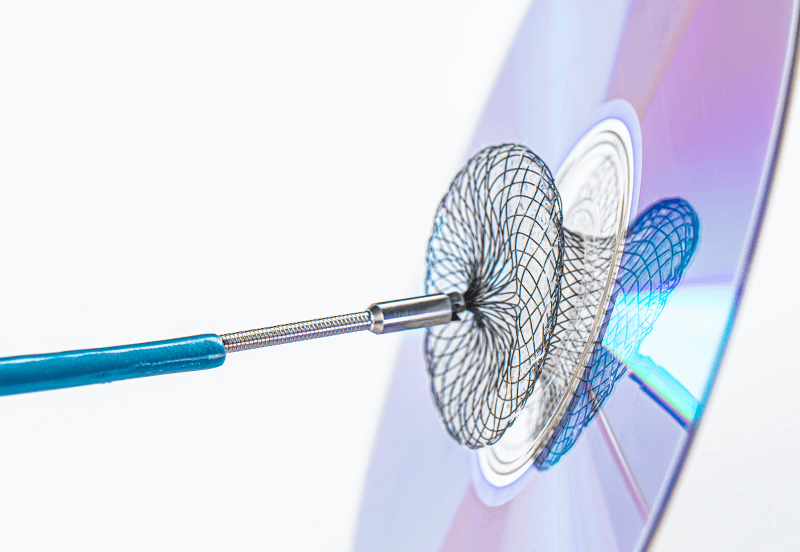
This is a narrative review published in REC Interventional Cardiology that integrates evidence from international registries, observational studies, clinical trials, and meta-analyses. The analysis identifies anatomical factors (cactus-type appendages, wide necks, or low depth), physiological factors (sinus rhythm at the time of implantation, associated with a higher risk of late embolization in registries such as NCDR LAAO), and technical factors (device undersizing or oversizing) as the main predictors of embolization. Regarding timing, most events occur during the acute period (first 24 hours), whereas embolizations to peripheral territories are more frequent in later phases (>45 days).
A reduction in embolization has been observed with newer generations of devices (such as WATCHMAN FLX and Amplatzer Amulet) compared with earlier ones. In the main comparative studies, embolization rates remain low and overall similar between platforms, ranging from approximately 0.2% to 0.9%.
Regarding the migration site, data from systematic reviews and registries show that the aorta is the most frequent location (30–37%), followed by the left ventricle (20–33%), the left atrium (24%), and peripheral arteries (5%). Embolization to the left ventricle is associated with greater complexity and a higher need for surgery, with surgical intervention rates of up to 44.4%.
Read also: Drugs for the Treatment of No-Reflow During PCI.
In terms of management, the initial strategy in hemodynamically stable patients is percutaneous retrieval, which is successful in approximately 66% of cases on the first attempt. However, nearly one-third of patients require a second attempt or surgery, and failure of the first attempt is associated with a significant increase in mortality (2.9% vs 21.4%). The choice of approach depends on the device location, device size, and clinical stability; nitinol devices (such as Amplatzer) show greater ease of recapture compared with other devices. In selected asymptomatic patients with devices lodged in the descending aorta, conservative management may be considered.
From a preventive standpoint, the review emphasizes planning with multimodality imaging (2D/3D TEE and computed tomography), appropriate device size selection, and operator experience (≥25 transseptal punctures and ≥10 left atrial appendage closure procedures). Compliance with technical release criteria (PASS for WATCHMAN and CLOSE for Amulet) and imaging follow-up at 45–90 days are also recommended.
In conclusion, embolization of left atrial appendage closure devices is an uncommon complication (close to 1%) but clinically relevant, with presentation and management depending on anatomical, technical, and device-related factors. Percutaneous retrieval represents the preferred initial strategy, reserving surgery for complex cases or failure of the initial approach. Improvements in device design and optimization of preprocedural planning will be key to further reducing its incidence.
Original Title: Embolization of left atrial appendage occluders: review of the current evidence.
Reference: Miguel Á. Martín-Arena, Guillermo Galeote-García, Alejandro Lara-García, Alfonso Jurado-Román, et al. REC Interv Cardiol. 2026;8(1):46-54.
Subscribe to our weekly newsletter
Get the latest scientific articles on interventional cardiology