






Advances in pharmacological therapies, equipment, and devices have enabled percutaneous coronary interventions (PCI) to be performed in a growing number of patients with a high burden of comorbidities and anatomical complexity. In this context, the term complex PCI has been introduced over the past decade to identify a broad spectrum of interventions with complex anatomical features, such as severe calcification, chronic total occlusion, bifurcation lesions, or multivessel treatment.
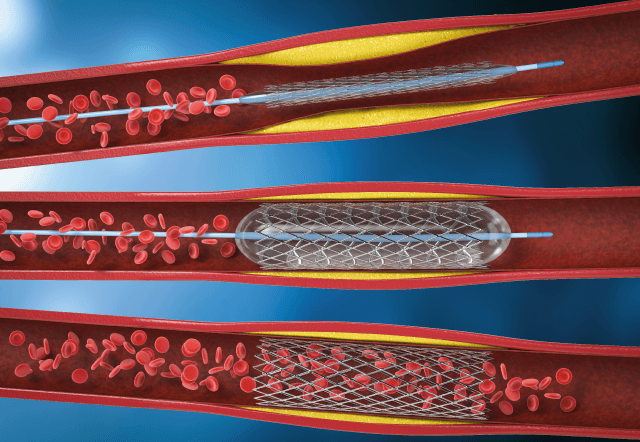 To date, limited data have been published on the association between complex PCI and the risk of adverse events, and it remains unclear whether complex PCI is independently associated with a higher risk of ischemic and bleeding events.
The aim of this study was to perform a systematic review and a Bayesian meta-analysis to evaluate the association between complex PCI and the risk of ischemic and bleeding events.
The Primary Endpoint (PE) was the rate of myocardial infarction (MI) and major bleeding. Secondary Endpoints (SE) included all-cause mortality, stent thrombosis, cardiovascular death, target vessel or target lesion revascularization, and stroke.
A total of 290,039 patients were included, of whom 33% underwent complex PCI. Compared with non-complex PCI, patients undergoing complex PCI had a higher risk of myocardial infarction (HR 1.71; 95% CI: 1.49–1.96), major bleeding (HR 1.24; 95% CI: 1.14–1.35), all-cause mortality (HR 1.21; 95% CI: 1.12–1.32), cardiovascular death (HR 1.29; 95% CI: 1.15–1.46), stent thrombosis (HR 1.76; 95% CI: 1.49–2.14), target lesion or target vessel revascularization (HR 1.99; 95% CI: 1.58–2.50), and stroke (HR 1.21; 95% CI: 1.03–1.42).
Conclusion: Significant increase in major bleeding and mortality in patients undergoing complex PCI
In conclusion, our systematic review and meta-analysis found that complex PCI is associated with a higher risk of ischemic events, including myocardial infarction, stent thrombosis, and target lesion or target vessel revascularization, compared with non-complex PCI. Additionally, complex PCI was associated with a higher risk of major bleeding. These findings highlight the increased risk associated with complex PCI in terms of both ischemic and bleeding complications.
Original Title: Ischaemic and bleeding events after complex versus non-complex PCI: a systematic review and meta-analysis.
Reference: Raffaele Piccolo et al. EuroIntervention 2026;22:e402-e414.
Subscribe to our weekly newsletter
Get the latest scientific articles on interventional cardiology



 en un número creciente de pacientes con una alta carga de comorbilidades y complejidad anatómica.)