






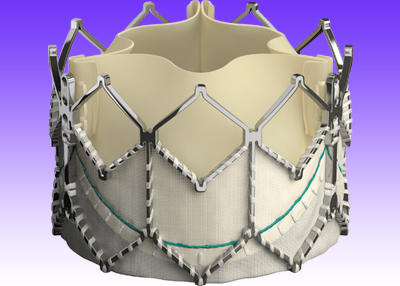
 Early experience with the valve-in-valve technique in the treatment of failed bioprosthetic surgical valves in transcatheter aortic valve replacement (TAVR) has yielded acceptable acute procedural results. This turned the technique into another therapeutic option, one that could even cause the reassessment of the age limit for the surgical implantation of a mechanical or bioprosthesis valve.
Generally, the age limit between the use of a mechanical valve or a bioprosthesis is about 65 years old. However, with the valve-in-valve technique, in the future, younger patients might receive bioprostheses knowing that, upon their degeneration, there is a reasonable treatment not involving reoperative surgery, thus avoiding events associated with anticoagulation and mechanical valves.
This study is aimed at examining 30-day and 1-year outcomes in a large cohort of high-surgical-risk patients undergoing valve-in-valve TAVR. Patients with dysfunctioning surgical aortic bioprostheses at high risk (≥50% major morbidity or mortality) for reoperative surgery were prospectively enrolled in the multicenter PARTNER registry.
The study included 365 patients with a mean Society of Thoracic Surgeons (STS) score of 9.1 ± 4.7%. At 30 days, all-cause mortality was 2.7%, stroke was 2.7%, major vascular complication was 4.1%, conversion to surgery was 0.6%, coronary occlusion was 0.8%, and need for pacemaker implantation was 1.9%. At one year, mortality was 12.4%.
Undoubtedly, the valve-in-valve technique requires experience, which was obvious in the results. There was a significant difference in mortality between the initial registry patients and the last patients, both at 30 days (8.2% vs. 0.7%, respectively; p = 0.0001) and at 1 year (19.7% vs. 9.8%, respectively; p = 0.006).
At 1 year, the mean gradient was 17.6 mm Hg, and effective orifice area was 1.16 cm2, with greater than mild aortic regurgitation of 1.9%.
Ejection fraction increased, and the ventricular mass index decreased, with reductions in both mitral and tricuspid concomitant regurgitation.
Quality of life scores and 6-min walk test distance results both improved significantly.
Conclusion
In high-risk patients with dysfunctioning surgical prostheses, the valve-in-valve technique was associated with relatively low mortality and complication rates, and significant functional improvement.
Original title: Transcatheter Aortic Valve Implantation Within Degenerated Aortic Surgical Bioprostheses. PARTNER 2 Valve-in-Valve Registry.
Reference: John G. Webb et al. J Am Coll Cardiol 2017;69:2253-62.
Get the latest scientific articles on interventional cardiologySubscribe to our weekly newsletter
We are interested in your opinion. Please, leave your comments, thoughts, questions, etc., below. They will be most welcome.



