






Courtesy of Dr. Carlos Fava.
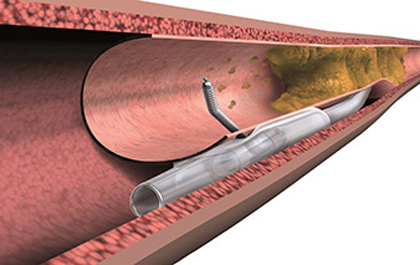 The presence of chronic total occlusions (CTO) in coronary angiograms varies between 5% and 30%, depending of the different analyzis. Likewise, they have been associated to higher mortality rate and the need for myocardial revascularization surgery.
The frequency of CTO PCI is low across the different series (3.8%), though it might be currently on the rise, as different strategies and devices are made available.
The study analyzed 111,273 patients form the Veterans Affairs data base between 2007 and 2013. 29,339 (26.4%) presented at least one CTO. Within this group, patients were usually older, had more risk factors, comorbidities, AMI, prior PCI and myocardial revascularization surgery (CABG).
PCI was performed in 2394 patients (8.1%) of those presenting CTO. The procedure was successful in 1908 cases (79.7%). Compared to failed CTO PCI, there were no differences between the groups. The right coronary artery was the one with more CTO; length was 20 mm; most were treated with DES, and 38% also received two stents. Procedural success was higher in the anterior descending artery.
Also, success rate increased over the years.
At two year follow up, PCI CTO success rate was associated with reduced mortality (hazard ratio: 0.67; 95% CI: 0.47 to 0.95; p<0.02) and less need for CABG (hazard ratio: 0.14; 95% CI 0.08 to 24; p<0.01), with no difference in rehospitalization for MI.
Conclusion
Approximately one every 4 patients with obstructive coronary artery disease present one CTO. Among patients undergoing elective PCI for CTO, success rate is 79.7%. Compared to failed CTO PCI, procedural success was associated with a reduction in death rate, as well as reduced need for CABG.
Comment
To this day, this is the largest series in the real world, which shows the fact that CTO PCI has increased not only in number, but also in success rate. Most importantly, this study shows CTO PCI is associated to higher survival rate and less need for CABG, even though a few reports may contradict these results.
The higher survival rate at follow up may be explained by the fact that the anterior descending artery had the highest success was achieved, and this significantly reduced residual stenosis.
In addition, we should bear in mind we have better devices, drug eluting stents, more experienced operators and improved medical treatments, which are certainly playing a fundamental role in the evolution of these patients.
Courtesy of Dr. Carlos Fava.
Original Title: Contemporary Incidence, Management and Long-Term Outcomes of Percutaneous of Coronary Intervention for Chronic Artery Total Occlusions.
Reference: Insight from VA CART Program. Thomas T Tsai, et al. J Am Cardiol Intv 2017;10:866-75.
Get the latest scientific articles on interventional cardiologySubscribe to our weekly newsletter
We are interested in your opinion. Please, leave your comments, thoughts, questions, etc., below. They will be most welcome.



