






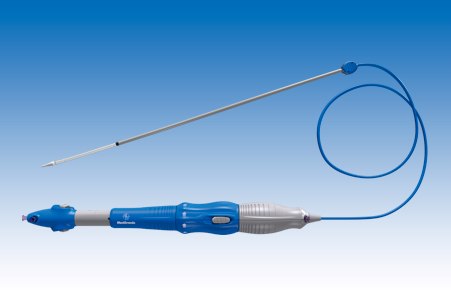
 The efficacy of transcatheter aortic valve replacement (TAVR) has been well-established. However, its limitations include suboptimal deployment and paravalvular leak. The Lotus system is a fully repositionable and retrievable device with controlled mechanical expansion. It features an adaptive seal to minimize paravalvular leak, it does not require early pacing during deployment, and, given its early functioning, the procedure is very stable, hemodynamically speaking.
This was a prospective noninferiority multicenter (United States, Canada, Germany, France, Australia, and Netherlands) study that randomized patients 2:1 to Lotus vs. CoreValve. Subjects had severe aortic stenosis, and presented high surgical risk or were inoperable.
The primary safety endpoint was a composite of death, stroke, major bleeding, renal insufficiency, and major vascular complications at 30 days. The primary efficacy endpoint was a composite of death, disabling stroke, and moderate or greater paravalvular leak at 1 year.
The study included 912 pacientes (CoreValve: 305; Lotus: 607) in 55 centers in the aforementioned countries, between 2014 and 2015.
The Lotus valve was noninferior as regards the primary safety endpoint at 30 days (Lotus, 19%, vs. CoreValve, 16%; p = 0.001 for noninferiority). Lotus was associated with a higher need for new pacemaker implantation (29.1 vs. 15.8; p < 0.001).
At 1 year, the curves for the primary safety endpoint were yuxtaposed (Lotus, 30.7%, vs. CoreValve, 30.2%; p = 0,83).
The Lotus device was also noninferior for the primary efficacy endpoint (Lotus, 16.7%, vs. CoreValve, 29%; p < 0.001 for noninferiority).
Both valves presented similar mortality rates (CoreValve, 13.7%, vs. Lotus, 11.9%; p = 0.48). However, CoreValve presented a higher rate of moderate to greater paravalvular leak (11.1% vs. 2.0%; p < 0.001) and a higher rate of disabling stroke (CoreValve, 7.3%, vs. Lotus, 3.6%; p = 0.02).
Conclusion
The Lotus valve turned out to be safe and effective when compared to the self-expanding device commercially available at the time of this study, CoreValve.

Original title: A Prospective, Randomised Investigation of a Novel Transcatheter Aortic Valve Implantation System: The REPRISE III Trial.
Presenter: Ted E. Feldman.
Get the latest scientific articles on interventional cardiologySubscribe to our weekly newsletter
We are interested in your opinion. Please, leave your comments, thoughts, questions, etc., below. They will be most welcome.



