






After the successful 8th edition of the ProEducar “José Gabay” Course (which took place on August 1st, 2017, at the Hilton Buenos Aires Hotel), it is time to assess its outcomes. In this case, Dr. Leandro Lasave, the Director of the José Gabay Course, analyzed the results of the aforementioned course and SOLACI’s educational work in the promotion of interventional cardiology in Latin America.
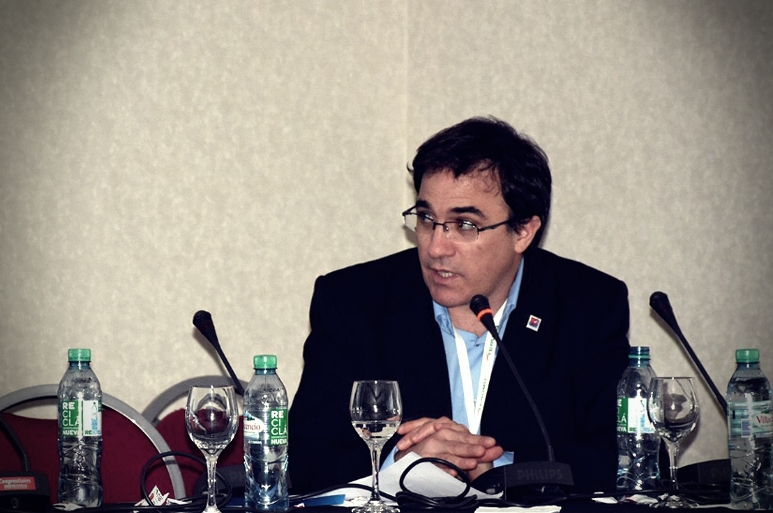
What is your final conclusion regarding the eighth edition of the ProEducar “José Gabay” Course?
The course was successful for the eighth consecutive time; there were over 140 attendees who stayed for the whole 12 hours of the course. That is significant, because it means that all topics caught the attention of the audience. That is my analysis as regards attendance.
Another fundamental aspect was the excellence that characterized all presentations. Lecturers exhibited an extremely high level. Among them we can count Dr. Ricardo Petraco, a world-renowned Brazilian physician who has resided in London for the past 11 years. The same can be said about world-class physician Dr. Juan Granada, from the United States, as well as many of the local and Latin American experts present. That is my analysis as regards scientific presentations.
The course consisted in 12 intensive hours of deep scientific activity. In that sense, all talks caught the attention of the audience and spurred debate and interaction among fellows, which is important because that is what we aim for.
How important is the fact that SOLACI promotes educational spaces such as this one for fellows in Latin America?
Since its foundation, SOLACI has been aimed at the continuous training of Latin American physicians and the homogenization of theory and training. In consequence, the promotion and encouragement provided by SOLACI is fundamental. In other words, that is what SOLACI is: support to continuous training. Our approach to this task is itinerant, i.e., we go country by country, using the course to call upon interventional trainees but also professionals who want to stay updated. As I have already mentioned, this 12-hour course deals with all the important topics, thus becoming an interesting source of updated information for fully trained physicians.
This promotion is part of SOLACI’s objectives. It is in its foundations.
As regards the future, what are your expectations for ProEducar?
ProEducar is a continuing training program. In consequence, we are constantly looking for ways to evolve. This course actually derived from such evolution, eight years ago. In that sense, it is anything but static: topics and hours change according to current needs.
On the other hand, ProEducar’s mission is to keep evolving in its quest for continuous education by means of tools other than the course. As an example, there is a bulletin, which is also in constant transformation. We are also assessing the possibility of creating an educational course that remains over time, a long-lasting course.
What would you say to young interventional cardiologists who have just graduated and are starting with their professional career?
In my opinion, many interventional trainees leave their training to everyday practice in the cath lab. It is essential for them not to neglect theory, which is a fundamental means of training. That is why these activities and courses are so significant. Practice is important, but it is not everything. In my opinion, theoretical training of new interventional trainees is a pending issue. In consequence, these opportunities are ideal and trainees should make the most of them.
Get the latest scientific articles on interventional cardiologySubscribe to our weekly newsletter
We are interested in your opinion. Please, leave your comments, thoughts, questions, etc., below. They will be most welcome.



