






Despite technological developments, all people working at a cath lab are inevitably exposed to radiation and its effects.
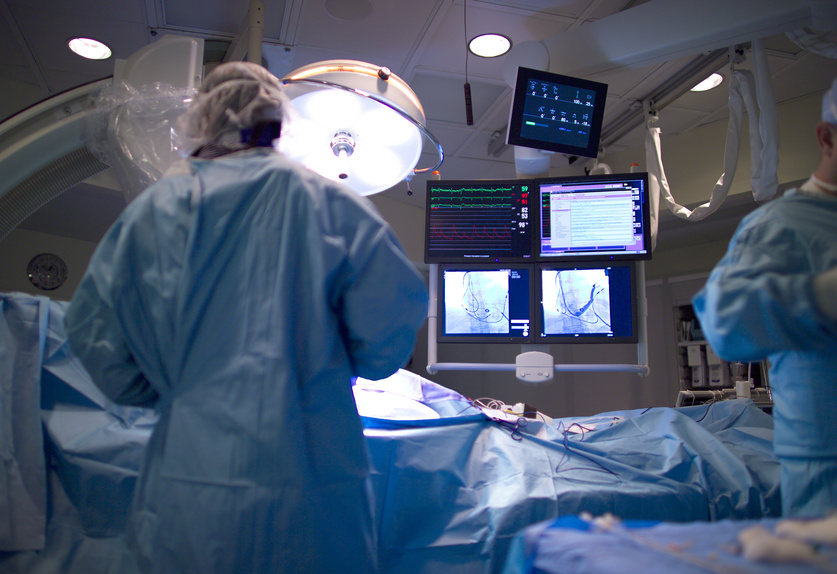
The radiation dose received by the operator is highly variable depending on procedure type, experience level, equipment used, patient characteristics, etc. Exposure to this scatter radiation may have deterministic effects, such as the onset of cataracts or stochastic effects, with the subsequent risk for malignancies.
Read also: “Important Study Detects Radiation-Induced DNA Damage in Operators After an Endovascular Procedure”.
The RADPAD (RADPAD 5100A-O; Worldwide Innovations & Technologies, Inc, Lenexa, KS) is a sterile, disposable shield placed on the patient with the aim to minimize scatter radiation. The objective of this study was to determine the efficacy of this shield in real-world situations.
The trial enrolled patients undergoing both diagnostic and treatment procedures who were randomized in a 1:1:1 ratio to the use of the shield (RADPAD), no shield (NOPAD), or a sham shield that was similar as regards size, color, and weight, but which did not offer radiation protection (SHAMPAD). Operators were all blinded to the assigned type of shield, and so were the investigators who analyzed the dosimetry.
Read also: “Study Confirms Lead Shields Protect Cath Lab Staff from Radiation Exposure”.
The primary endpoint was the difference in relative exposure of the primary operator between the RADPAD and NOPAD arms.
A total of 766 consecutive coronary procedures were randomized to RADPAD (N = 255), NOPAD (N = 255), or SHAMPAD (N = 256).
Read also: “Effects of Cerebral Radiation on Interventional Cardiologists”.
The use of RADPAD was associated with a 20% reduction in relative primary operator exposure compared with that of NOPAD (p = 0.01) and a 44% reduction compared with the use of a SHAMPAD (p < 0.001).
Conclusion
In daily practice, the standard use of the RADPAD radiation shield was associated with a significant reduction in the radiation dose received by the primary operator. This study supports the routine use of this shield in the cath lab.
Editorial
Surprisingly, operator exposure was significantly higher in the SHAMPAD arm, which used a shield that was identical to the original except for radiation protection, than in the NOPAD arm, in which no shield was used.
It is hypothesized that the presence of a shield induces a sense of security and may reduce the operator’s tendency to maintain an appropriate distance from the radiation source. This behavior is similar to that of an individual who drives a car with airbag protection and speeds more than he ever would if he drove an “unsafer” car.
All measures implemented for the reduction of radiation exposure received by patients and cath lab staff are valid and mutually complementary.
Original title: Efficacy of the RADPAD Protection Drape in Reducing Operators’ Radiation Exposure in the Catheterization Laboratory. A Sham-Controlled Randomized Trial.
Reference: Wieneke Vlastra et al. Circ Cardiovasc Interv. 2017;10:e006058.
Get the latest scientific articles on interventional cardiologySubscribe to our weekly newsletter
We are interested in your opinion. Please, leave your comments, thoughts, questions, etc., below. They will be most welcome.



