






Long-term follow-up of patients under 50 with multivessel coronary artery disease suggests surgery outcomes are significantly better than angioplasty outcomes. This study, presented at the Society of Thoracic Surgeons’ (STS) Annual Meeting, concludes that surgery should continue as plan A when it comes to young patients with three-vessel disease.
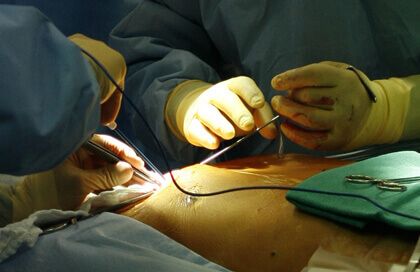 Surgeons complain that many patients never actually hear their opinion before revascularization. We must acknowledge that to be true, since we often say something like I can revascularize all of your arteries without cracking your chest open, and you can go home much quicker. Our information usually does not extend over time.
Both US and European guidelines advocate for a full heart team approach, something that is not frequent in daily practice (particularly when we can carry out “ad hoc” angioplasties). However, these guidelines are based in works dealing with patients around 70 years old, whose outcomes may be different from those for people under 50.
Read also: Is Emergency Cardiac Surgery Necessary in TAVR?
This study included 200 patients with a mean age of 45 years old who underwent myocardial revascularization surgery or angioplasty between 2004 and 2016.
At 5 years, angioplasty patients had increased risk of infarction (9% vs. 1%; p = 0.02), repeat revascularization (31% vs. 7%; p < 0.01), and hospital readmission (45% vs. 10%; p < 0.001).
The combined endpoint (all-cause death, stroke, infarction, or repeat revascularization) was higher for those treated with angioplasty (34% vs. 12%; p < 0.01).
Read also: Angioplasty vs. Surgery in Long-Term Critical Ischemia.
At 12 years, surgery still maintained an advantage in terms of repeat revascularization and readmission (p < 0.001 for both).
When patients were stratified by how many vessels were affected, event rates were similar in those with single- and two-vessel disease at 5 years.
In patients with three-vessel disease, angioplasty was associated with greater rates of repeat revascularization (36.4% vs. 7.6%; p < 0.01) and combined events (36.4% vs. 12.7%; p = 0.02) when compared with surgery. At 12 years, surgery also had an advantage in terms of infarction.
Read also: Quality of Life Between Surgery and Angioplasty for the Treatment of Left Main Disease.
Patients who underwent surgery were more likely to be diabetic, had lower ejection fraction, and were more likely to have peripheral vascular disease.
As usual, in works with such a long follow-up period, the technology used at the time the procedures were carried out is not the same technology we use in current clinical practice. Almost a fourth of all patients who underwent angioplasty received bare-metal stents (BMS).
Original title: Coronary Artery Bypass Surgery Compared to Percutaneous Coronary Intervention in Patients Younger than 50 Years of Age: Long-Term Outcomes.
Reference: Awad WI et al. Presented at the Society of Thoracic Surgeons Annual Meeting. Fort Lauderdale, FL.
Get the latest scientific articles on interventional cardiologySubscribe to our weekly newsletter
We are interested in your opinion. Please, leave your comments, thoughts, questions, etc., below. They will be most welcome.



