



TCT 2018 | NEOPRO: A Registry for Acurate neo and Evolut PRO

The purpose of this registry was to compare short-term clinical events and echocardiographic findings in two self-expanding valves used with transfemoral access, Acurate neo and Evolut PRO.
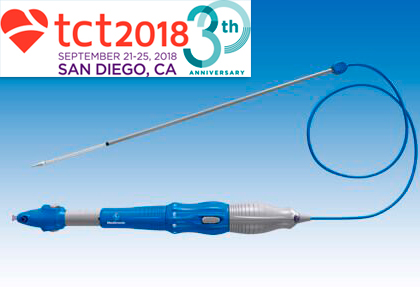
NEOPRO: registro entre Acurate neo y Evolut PROThe registry included a retrospective follow-up of 1551 patients, among whom 1263 received an Acurate neo valve and 288 received an Evolut Pro valve.


The procedural success rates according to VARC-2 criteria were high, 90.5% vs. 91.6% (p = 0.7), and the rates of occurrence of moderate-to-severe paravalvular aortic regurgitation were 7.3% vs. 5.7% (p = 0.5), respectively. There were no instances of coronary occlusion in the whole cohort and the rates of permanent pacemaker implantation were low and similar, around 12%.


The rates of bleeding and vascular complications were higher among patients in the Acurate neo arm, but this difference disappeared after adjusting these populations according to their clinical characteristics.


Original title: Nonrandomized Comparison of Two Transcatheter Heart Valve in Patients with Severe Aortic Stenosis.

Presenter: Azeem Latib.


NEO-PRO-Registry-presentación


Subscribe to our weekly newsletter

Get the latest scientific articles on interventional cardiology

We are interested in your opinion. Please, leave your comments, thoughts, questions, etc., below. They will be most welcome.


More articles by this author

Is it really necessary to monitor all patients after TAVR?

Conduction disorders (CD) after transcatheter aortic valve replacement (TAVR) are a frequent complication and may lead to the need for permanent pacemaker implantation (PPI)....

Is it really necessary to monitor all patients after TAVR?

Conduction disorders (CD) after transcatheter aortic valve replacement (TAVR) are a frequent complication and may lead to the need for permanent pacemaker implantation (PPI)....

Transradial Aortic Valvuloplasty: Is Minimalism Worth It?

Balloon aortic valvuloplasty (BAV) has historically been used either as a bridge strategy, an assessment tool, or even palliative treatment in severe aortic stenosis...

Atrial Fibrillation After Percutaneous Patent Foramen Ovale Closure: Cohort Study with Continuous Implantable Cardiac Monitoring

Atrial fibrillation (AF) is a recognized complication following percutaneous closure of a patent foramen ovale (PFO), with reported incidences of up to 30% during...

LEAVE A REPLY

Please enter your comment!
Please enter your name here

Related Articles

SOLACI Sessionsspot_img

Recent Articles

Coronary Perforations and Use of Covered Stents: Safe and Effective Long-Term Strategy?

Coronary perforations remain one of the most serious complications of percutaneous coronary intervention (PCI), especially in cases of Ellis ruptures type III. In these...

Is it really necessary to monitor all patients after TAVR?

Conduction disorders (CD) after transcatheter aortic valve replacement (TAVR) are a frequent complication and may lead to the need for permanent pacemaker implantation (PPI)....

Is it really necessary to monitor all patients after TAVR?

Conduction disorders (CD) after transcatheter aortic valve replacement (TAVR) are a frequent complication and may lead to the need for permanent pacemaker implantation (PPI)....
