



Modelos europeos de telemedicina, como el servicio finlandés Medilux, permiten realizar consultas médicas online mediante un cuestionario clínico, sin acudir a una consulta presencial.

Dual Layered for Dual Protection in Carotid PCI

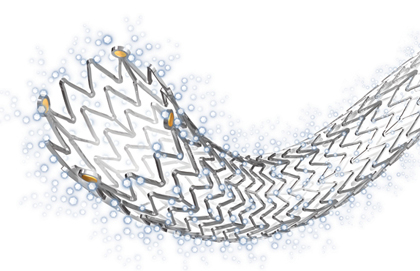
At present, there is more than one dual layered stent in the market offering additional protection in carotid PCI. Therefore we saw fit to look at these devices to compare class benefits and find any specific differences. 
Doble mallado para doble protección en angioplastia carotídea

This study assessed the safety and efficacy of two dual layered mesh covered stents especially designed for carotid PCI. These had been already assessed separately and in small studies: the Roadsaver de Terumo and the CGuard de InspireMD.

A meta-analysis was carried out of studies that had included over 100 cases. Primary end point was death or stroke rate. Secondary end points included restenosis and thrombosis. 

Patients were divided in two groups according to device: Roadsaver (n=250) and CGuard (n=306).

Mortality rate at one-year followup for Terumo was 2.8%, while CGuard obtained 1.31%, a non-significant difference.

Something similar happened with stroke (1.6% vs 1.9%, respectively).


Read also: Number of Hours of Sleep and Risk of Stroke.


A clinical indication of carotid PCI was the only predictor of death or stroke.

The only significant difference was restenosis, with 4% for Roadsaver and 0.65% for CGuard (p=0.007). One patient in each group developed stent thrombosis. 

The use of Terumo was the sole predictor of restenosis.

Conclusion

With an extremely low annual rate of stroke for both devices, it seems dual layered mesh covered stents are taking hold of carotid PCI. Restenosis rate in one of the devices resulted superior to its competitor’s, though still within a low rate. 

Original Title: Use of Dual-Layered Stents for Carotid Artery Angioplasty. 1-Year Results of a Patient-Based Meta-Analysis.

Reference: Eugenio Stabile et al. J Am Coll Cardiol Intv 2020;13:1709–15.https://doi.org/10.1016/j.jcin.2020.03.048.


Subscribe to our weekly newsletter

Get the latest scientific articles on interventional cardiology

More articles by this author

SCAI 2026 | Deep vein arterialization as an alternative in patients with critical limb ischemia without conventional options

Critical limb ischemia (CLI) represents one of the most advanced stages of peripheral arterial disease (PAD). In a significant proportion of patients, distal anatomy,...

C-TRACT: Endovascular therapy in post-thrombotic syndrome due to iliac obstruction

Post-thrombotic syndrome (PTS) is one of the most limiting sequelae following proximal deep vein thrombosis (DVT). It clinically manifests as chronic pain, edema, skin...

Coil embolization of segmental arteries as a spinal cord protection strategy prior to complex endovascular repair of thoracoabdominal aorta

Spinal cord ischemia remains one of the most devastating complications in the repair of thoracoabdominal aneurysms, with incidences of up to 20–30% in extensive...

Mechanical thrombectomy versus anticoagulation in intermediate-risk pulmonary embolism: systematic review and meta-analysis

Intermediate-risk pulmonary embolism (PE) has anticoagulation as the standard treatment, while reperfusion strategies remain a matter of debate. In this context, mechanical thrombectomy has...

LEAVE A REPLY

Please enter your comment!
Please enter your name here

Related Articles

SOLACI Sessionsspot_img

Recent Articles

KISS Trial: provisional stenting in non-left main coronary bifurcations — is less more?

Coronary bifurcation angioplasty remains one of the most frequent and technically challenging scenarios in interventional cardiology. Between 15% and 20% of coronary procedures involve...

Complex radial access: a four-step protocol to overcome loops and tortuosity

Radial access is currently the preferred strategy for coronary angiography and percutaneous coronary interventions due to its lower rates of bleeding and vascular complications...

Percutaneous closure of paravalvular leaks in high-risk patients: clinical outcomes and the impact of residual leak

Paravalvular leak (PVL) is a relatively frequent complication following valve replacement (overall incidence 5–18%; 2–10% in the aortic position and 7–17% in the mitral...

