






As hospitalization time after a transcatheter aortic valve replacement (TAVR) is reduced, we are observing a concomitant increase in re-hospitalizations due to conduction disorders. Early discharge is a great step, but it should be noted that conduction disorders can happen beyond 48 hours.
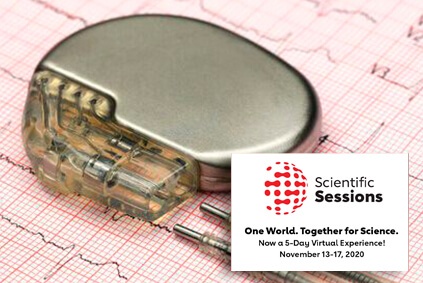
A few years ago, pacemaker implantation rates after discharge were about 7%; nowadays, that figure has almost been doubled.
Conduction system injury and its subsequent complete atrioventricular block is a well-known TAVR complication, whose prevalence rate varies according to prosthesis type, implantation technique, operator and center experience, etc. The worldwide trend to speed up patient discharge after TAVR has led to more indications for permanent pacemakers after the index hospitalization.
This paper, presented at the American Heart Association (AHA) 2020 Scientific Sessions and simultaneously published in JACC: Cardiovascular Interventions, describes this new reality.
Read also: AHA 2020 | POLYPILL: One Pill Plus Aspirin to Treat Everything.
The analysis included 62,083 patients registered in the United States database who underwent TAVR between 2012 and 2017. Out of all patients, 11% needed a permanent pacemaker after the procedure (most during the index hospitalization). During the study period, implantation rates were stable (p = 0.632 for trend).
Hospitalization time was significantly shortened from a mean 6 days in 2012 to just 2 days in 2017 (p < 0.0001).
Read also: The Most Read Scientific Articles in Interventional Cardiology.
The combination of shorter hospital stays and stable pacemaker rates means many patients underwent implantation in subsequent post-discharge visits.
Patients who present a high risk of atrioventricular block after discharge, those with right-sided bundle branch block, transient blockages after the procedure, a deep implant, or an oversized valve compared with annular dimensions should be considered for remote and continuous ambulatory monitoring.
Original title: Shifting trends in timing of pacemaker implantation after transcatheter aortic valve replacement.
Reference: Mazzella AJ et al. Presentado en el congreso AHA 2020 y publicado simultáneamente en J Am Coll Cardiol Intv. 2020.
Subscribe to our weekly newsletter
Get the latest scientific articles on interventional cardiology



