LATAM Bif Registry: March 2021 Report

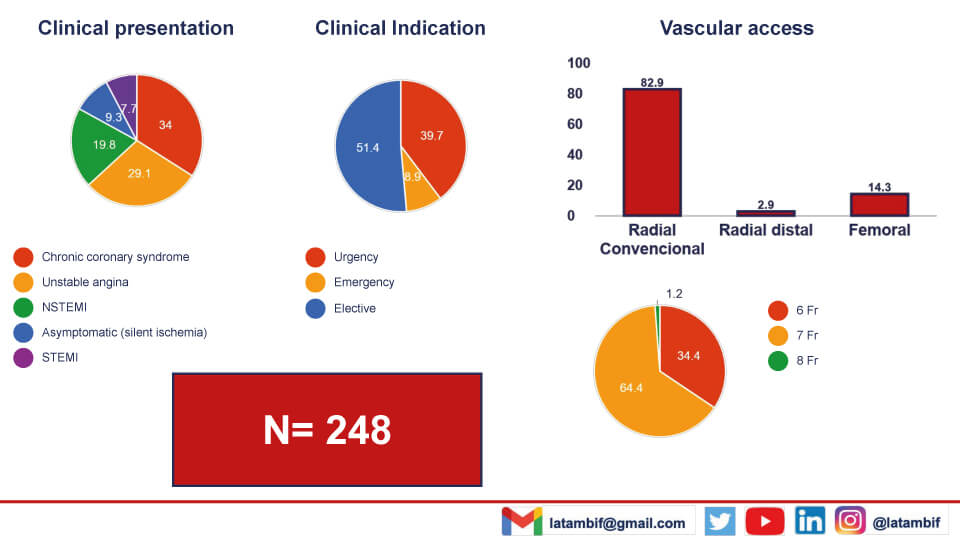
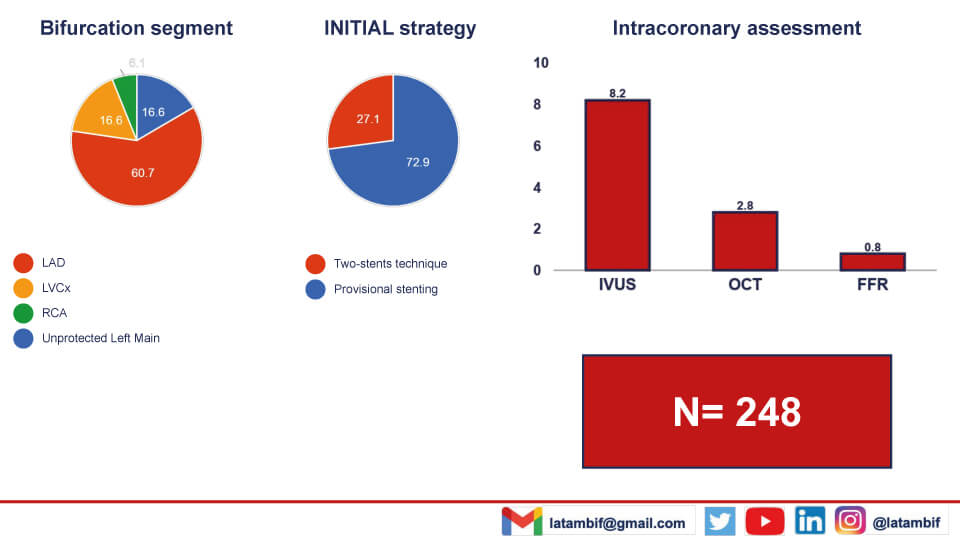
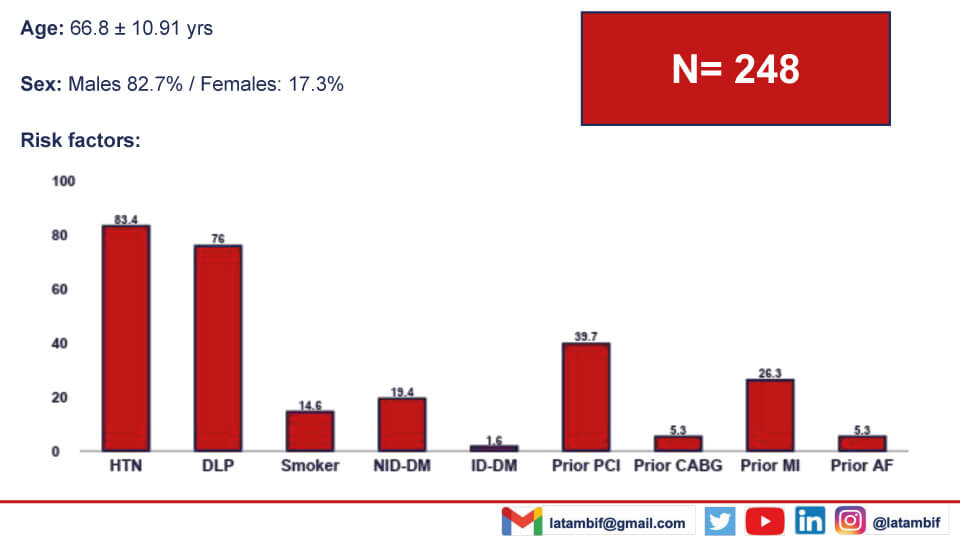
Know the new data from The Latin American Registry of Coronary Bifurcation Percutaneous Intervention  from March 2021. The registry is close to 250 patients (25% increase compared to the prior month) and continues to consolidate month after month. 

For those who are still unfamiliar with it, the LATAM Bif Registry is a prospective, multicenter registry aiming at assessing the reality of percutaneous treatment of coronary bifurcations, defining its needs and establishing strategies to further advance the daily clinical practice. 

Know the data
monthly-report-march-2021

How to make part of the LATAM Bif Registry?

Write to latambif@gmail.com. You will receive all the information and documentation required for LATAMBif, coordinated by SOLACI Research.

Why take part in LATAM Bif?

  1. The chance to access your own database dedicated to coronary bifurcations, with unified variables for all centers across Latin America. 
  2. Each center will own their data and will be able to analyze outcomes in real time. 
  3. The chance to interact with centers interested in research and publication throughout the region. 
  4. The chance to present at local and international events the outcomes of LATAM Bif Registry.
  5. In case you might need help to develop research projects and/or carry out statistical analysis, you will have the support of SOLACI Research.
  6. SOLACI Research will provide weekly auditing for all data, initial and annual (mandatory followup), for it to be charged correctly. 

Write now to latambif@gmail.com and start participating of LATAM Bif.


Know more about the LATAM Bif Registry


Subscribe to our weekly newsletter

Get the latest scientific articles on interventional cardiology

More articles by this author

Technical Training in Hemodynamics and Interventional Cardioangiology | SOLACI–CACI

The SOLACI–CACI Technical Training in Hemodynamics and Interventional Cardioangiology is an academic program designed for the initial training and professional development of non-physician healthcare...

SOLACI Webinar for Nurses and Technicians | Cardiovascular Risk Factors in Women

Cardiovascular disease remains the leading cause of death in women. Do we truly understand its risk factors and warning signs? 📢 We invite you to...

SOLACI Session at Miami Valves 2026

Once again, the Latin American Society of Interventional Cardiology will be present at one of the most important congresses worldwide in the field, with...

Advanced Postgraduate Course in Hemodynamics and Interventional Cardiology – 2026 Edition

Registration is now open for the SOLACI–CACI Advanced Postgraduate Course in Hemodynamics and Interventional Cardiology – 2026 Edition. The program is intended for physicians with...

LEAVE A REPLY

Please enter your comment!
Please enter your name here

Related Articles

SOLACI Sessionsspot_img

Recent Articles

Hybrid Coronary Revascularization versus Conventional Bypass Surgery in Left Main Coronary Artery Disease

Significant left main coronary artery (LMCA) disease continues to represent a therapeutic challenge, particularly in patients with complex multivessel disease and high SYNTAX scores,...

VECTOR: First Percutaneous Aorto-Coronary Bypass Case, a New Conceptual Approach

Coronary obstruction represents one of the most severe complications associated with transcatheter aortic valve implantation, particularly in valve-in-valve scenarios involving surgical bioprostheses, narrow aortic...

Comparison of strategies: NMA of IVUS, OCT, or angiography in complex lesions

Percutaneous coronary intervention (PCI) in complex lesions continues to represent a technical challenge in contemporary interventional cardiology. Angiography, although it remains the most widely...