






The Latin American Society of Interventional Cardiology is proud to announce that the Latin American Clinical Guidelines on TAVR vs. SAVR on patients with severe aortic stenosis have been published.
 This high-quality scientific work was published in the Heart BMJ Journal and is the result of an arduous joint effort between SOLACI (through its Research Department, SOLACI Research) and the Interamerican Society of Cardiology (SIAC).
“This is an unparalleled event. It is the first time that SOLACI develops clinical guidelines of this caliber along th SIAC,” said Dr. Pablo Lamelas, Director of SOLACI Research and one of the main backers of this initiative.
The new clinical guidelines are of great relevance since they provide plenty of information to guide the decision between transcatheter aortic valve replacement (TAVR) and surgical aortic valve replacement (SAVR) in patients with severe aortic stenosis in Latin America.
In this regard, Dr. Alfaro Marchena, a member of the SIAC Steering Committee and a key player in the preparation of these guidelines, praised the robust international standards that supported the data and recommendations reached: “these guidelines are of high scientific quality: reliable, transparent, and developed through a very rigorous methodological process.”
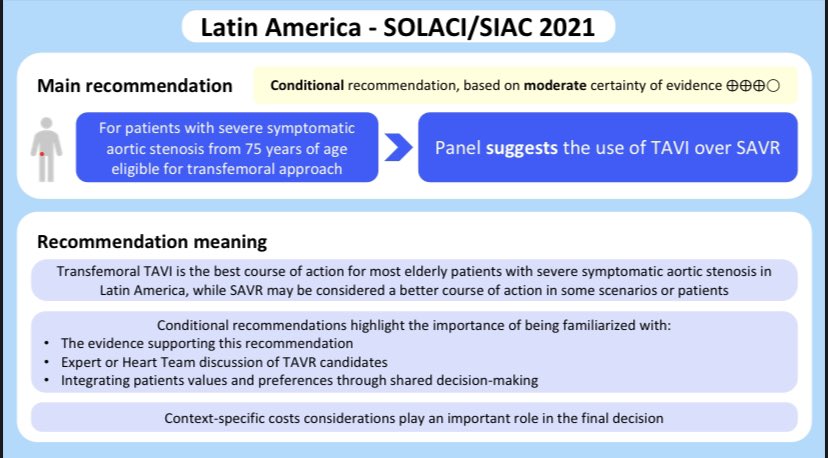
One of the most important conclusions of this research is the recommendation to perform TAVR instead of SAVR in patients >75 years of age with severe aortic stenosis who live in Latin America and are candidates for a transfemoral approach. This recommendation is based on a moderate level of evidence and is conditional—i.e., in some cases, surgery may be a better option.
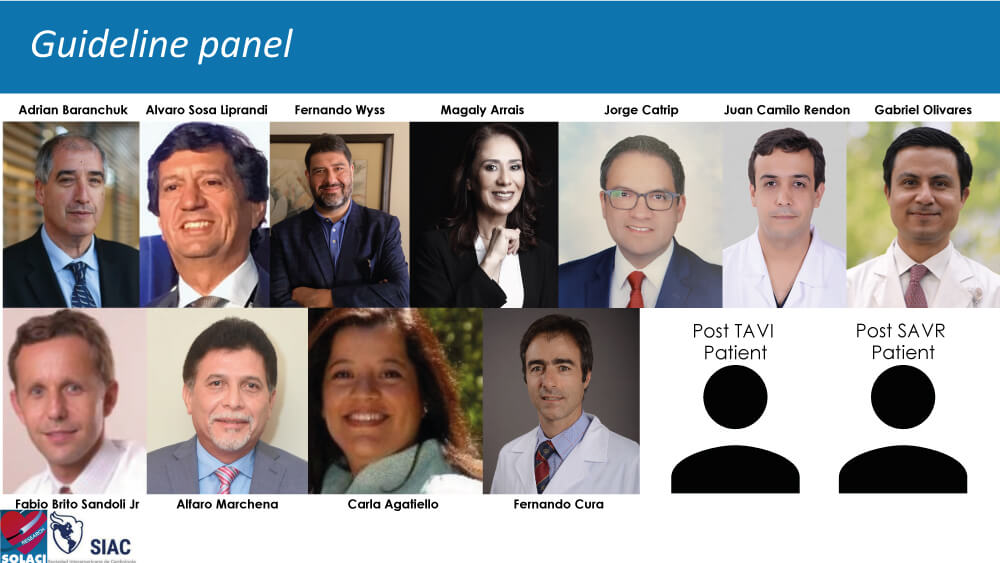
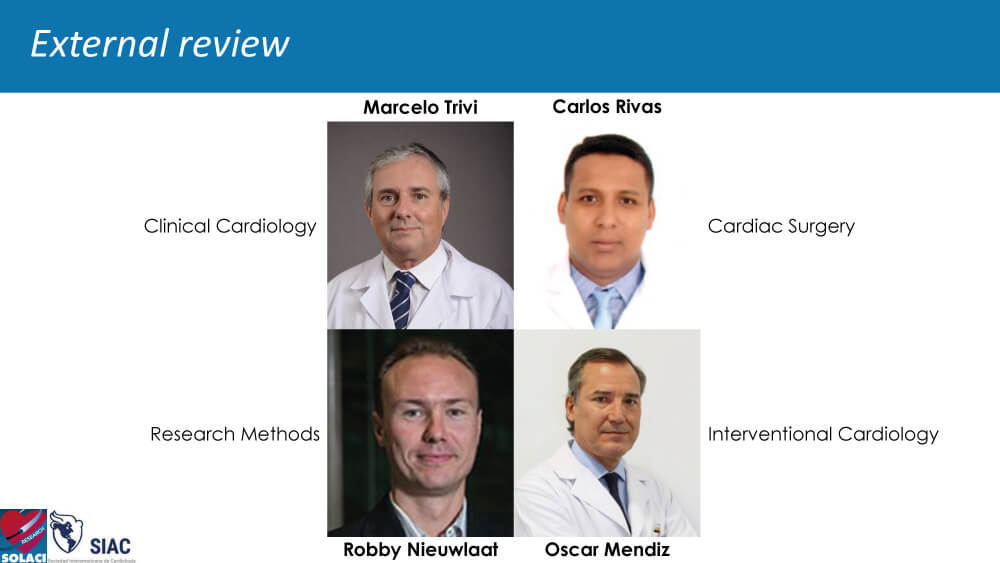
The research process included forming an expert panel that selected and ranked the results, and then evaluated the research summaries to develop the recommendations. This panel consisted of interventional cardiologists, cardiovascular surgeons, and patients.
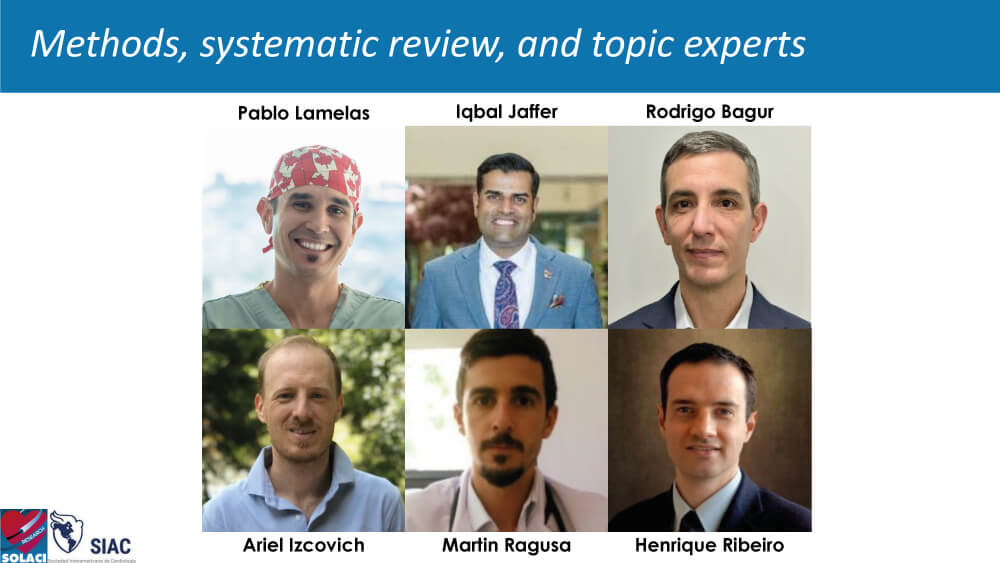
Furthermore, the research methods team included professionals with experience in the GRADE protocol, and experts in the field with ample knowledge on TAVR and clinical research.
Dr. Lamelas recalled that the guidelines had been in the works for over a year and that they were ” the result of constant collaboration and a lot of work.” In this regard, he thanked the unconditional support of the SOLACI Board of Directors (headed by Dr. José Mangione) to this project.
Finally, Dr. Aníbal Damonte, Vice-President of SOLACI, considered that “the availability of reliable and transparent data is essential for the continuing development of cardiovascular interventionism in Latin America on a solid basis for the future. In this sense, we hope that these guidelines will imply a leap in quality to continue improving the quality of life of all our patients.”
Subscribe to our weekly newsletter
Get the latest scientific articles on interventional cardiology



