



Novel DES Technology Promises to Become the Next DES Generation

The novel technology of drug-eluting stent Supreme was designed to synchronize antiproliferative drug release and leave a base behind to promote healing.
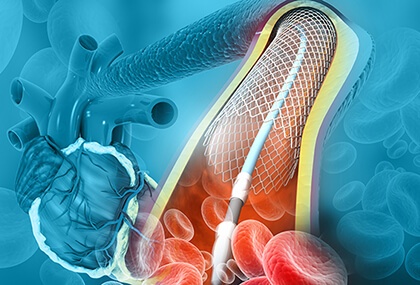
Nueva tecnología en DES

Accelerated endothelial healing after antiproliferative drug release may limit the long-term inflammatory response.

This multicenter, single-blind study included 1600 patients who were randomized 2:1 to receive drug-eluting stent Supreme vs. a classic permanent-polymer everolimus-eluting stent (Xiance).

The primary endpoint was a composite of cardiac death, vessel-related infarction, and clinically justified lesion revascularization. The trial was designed to demonstrate noninferiority at 12 months.

Included patients had acute or chronic coronary syndromes.

Noninferiority was achieved at 12 months, as the primary outcome occurred in 5.4% of patients in the Supreme arm vs. 5.1% in the Xience arm. No difference was observed in device success rate, clinically justified revascularization, or stent thrombosis.


Read also: Abdominal Aortic Aneurysm during the Pandemic: Should They Be Operated or Deferred?


The composite of cardiovascular death and vessel-related infarction occurred in 3.5% of patients for Supreme vs. 4.6% for Xience, a difference that did not reach statistical significance. The rates for clinically justified revascularization and non-justified revascularization were superior in the Supreme arm.

Conclusion

Angioplasty using the Supreme stent was noninferior to that with Xience in patients with chronic and acute coronary syndromes.

CIRCULATIONAHA-120-052482

Original Title: Novel Supreme Drug-Eluting Stents With Early Synchronized Antiproliferative Drug Delivery to Inhibit Smooth Muscle Cell Proliferation After Drug-Eluting Stents Implantation in Coronary Artery Disease. Results of the PIONEER III Randomized Clinical Trial.

Reference: Alexandra J Lansky et al. Circulation. 2021 Jun;143(22):2143-2154. doi: 10.1161/CIRCULATIONAHA.120.052482.


Subscribe to our weekly newsletter

Get the latest scientific articles on interventional cardiology

More articles by this author

Comparison of strategies: NMA of IVUS, OCT, or angiography in complex lesions

Percutaneous coronary intervention (PCI) in complex lesions continues to represent a technical challenge in contemporary interventional cardiology. Angiography, although it remains the most widely...

Dynamic Coronary Roadmap: does it really help reduce contrast use?

Contrast-induced nephropathy remains a relevant complication of percutaneous coronary interventions (PCI), particularly in patients with multiple comorbidities and complex coronary anatomies. Dynamic Coronary Roadmap...

Long-Term Cardiovascular Risk in Patients With ANOCA: A Clinical Reality to Consider?

Chronic stable angina (CSA) remains one of the most frequent reasons for referral to diagnostic coronary angiography (CAG). In a substantial proportion of these...

Perforation Management in Bifurcations: Bench Testing of Bailout with Covered Stents

Coronary perforations during PCI are one of the most dreaded complications in interventional cardiology, especially in bifurcations. Though rate, this critical situation requires an...

LEAVE A REPLY

Please enter your comment!
Please enter your name here

Related Articles

SOLACI Sessionsspot_img

Recent Articles

VECTOR: First Percutaneous Aorto-Coronary Bypass Case, a New Conceptual Approach

Coronary obstruction represents one of the most severe complications associated with transcatheter aortic valve implantation, particularly in valve-in-valve scenarios involving surgical bioprostheses, narrow aortic...

Comparison of strategies: NMA of IVUS, OCT, or angiography in complex lesions

Percutaneous coronary intervention (PCI) in complex lesions continues to represent a technical challenge in contemporary interventional cardiology. Angiography, although it remains the most widely...

Is upper-limb aerobic training an effective alternative to lower-limb exercise in peripheral artery disease?

Peripheral artery disease is associated with impaired functional capacity, reduced walking distance, and poorer quality of life, and structured exercise is a class I...

