






Transcatheter aortic valve replacement (TAVR) has become an established treatment for severe aortic stenosis and is now performed in increasingly lower-risk populations.
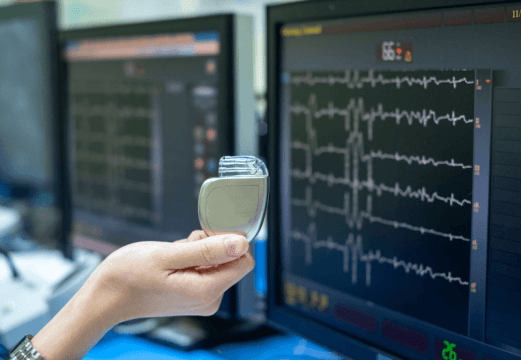
Despite the use of high implant strategies, the need for permanent pacemaker implantation (PPI) remains a persistent challenge, particularly in patients with right bundle branch block (RBBB) and, to a lesser extent, in those with first-degree AV block (1st-degree AVB) or left bundle branch block (LBBB).
While PPI is considered a low-risk procedure, it is associated with longer hospital stays, increased hospital and follow-up costs, generator replacement needs, and a higher risk of endocarditis, tricuspid regurgitation, or other complications.
Researchers analyzed a cohort of 1069 patients who underwent TAVR. Of these, 825 (77.2%) had a preprocedural PR interval <240 ms, 44 (4.1%) had a PR interval >240 ms, 93 (8.7%) had LBBB, and 107 (10%) had RBBB.
The primary endpoint (PEP) was high-grade AV block (HAVB) at 30 days, defined as the presence of two non-conducted P waves in sinus rhythm or bradycardia <50 bpm in patients with atrial fibrillation or flutter.
Patients with conduction disorders were older and predominantly male, while women were more common in the group without conduction disturbances. Comorbidities were similar across groups, although patients with a PR interval >240 ms had a higher prevalence of myocardial revascularization surgery (MRS) and dialysis. Patients with LBBB experienced a higher incidence of diabetes and atrial fibrillation or flutter, and those with RBBB had a higher rate of prior MRS compared to the control group.
Read also: Statins and Small Abdominal Aortic Aneurysms: Unexpected Aid?
The STS mortality score was 5%. Ejection fraction averaged 60%, except in the LBBB group, where it was significantly lower (50%). The average aortic valve area was 0.8 cm². The most commonly used approach was the transfemoral access, and the most frequently implanted valve was the balloon-expandable valve (92%).
The PEP was significantly higher in patients with RBBB compared to those without conduction disorders (17.8% vs. 2.2%; p < 0.001). In the PR >240 ms and LBBB groups, the PEP was also higher, though without statistical significance (4.5% vs. 2.2%; p=0.31 and 5.4% vs. 2.2%; p=0.6, respectively).
The need for PPI was significantly higher in the RBBB and LBBB groups compared to the control group (39.2% vs. 6.1%; p <0.001 and 11.8% vs. 6.1%; p=0.03, respectively). In contrast, for patients with a PR interval >240 ms, the rate was similar to that for the control group (9.1% vs. 6.1%; p=0.42). Most HAVB episodes in the control group, as well as in the PR interval >240 ms and LBBB groups, occurred after 24 hours.
Read also: Coronary Events Following TAVI: A Registry.
Thirty-day mortality was higher in the RBBB group compared to the control group (2.8% vs. 0.5%; p=0.009), although there were no significant differences in one-year mortality among the four groups.
RBBB emerged as a predictor of high-grade AV block.
Conclusion
Despite no immediate ECG abnormalities following TAVR, 17.8% of patients with RBBB developed high-grade AV block, mostly within the first 24 hours. In contrast, its incidence was relatively low in patients with PR interval >240 ms or LBBB. Early discharge with outpatient ECG monitoring could be an appropriate strategy for these patients.
Original Title: Incidence and Predictors of High-Grade AV Block in Patients With Initially Unchanged Electrocardiogram After TAVR.
Reference: Mohamed Elhadi, et al. JSCAI https://doi.org/10.1016/j.jscai.2025.103666.
Subscribe to our weekly newsletter
Get the latest scientific articles on interventional cardiology



