






Permanent pacemaker implantation (PPM) for high grade atrioventricular block (AVB) continues to be one of the most frequent complications after transcatheter aortic valve replacement (TAVR), with 10 to 15 % annual incidence. However, the available predictive algorithms still show limitations.
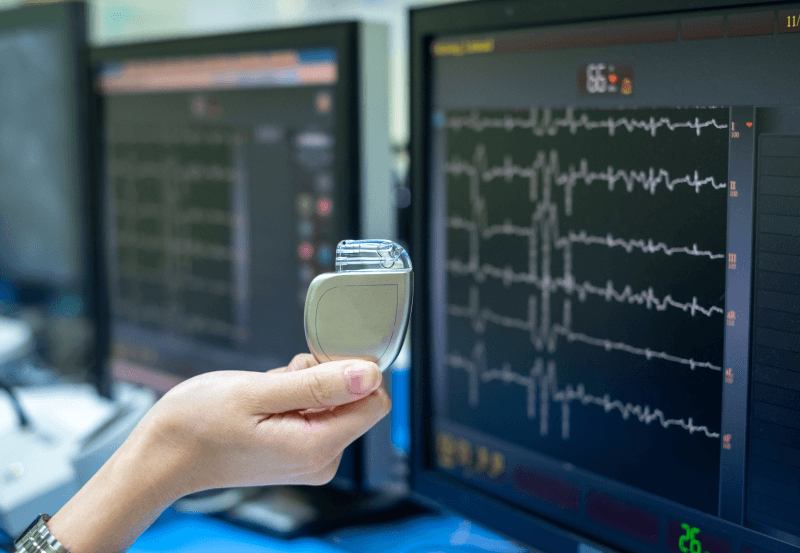
The CONDUCT-TAVI, a prospective multicenter study carried out in two Australian centers, included 200 patients undergoing TAVR between 2021 and 2023. Baseline clinical anatomical and procedural variables were recorded, and an electrophysiology study was conducted measuring AH/HV intervals, and rapid atrial stimulation was used to determine the Wenckebach point (AVW). Also, subcutaneous loop recorders were implanted for continuous one-year rhythm monitoring.
The primary end point was PPM implantation secondary to high grade AV block. Secondary end points included early (≤ 48 h) and late (> 48 h) PPM implantation, new persistent left bundle branch block (LBBB), and de novo atrial fibrillation (AF).
At one year, total PPM incidence for high grade AV block was 21 % (13.5 % early and 7.5 % late), while de novo AF was observed in 21.7 % of patients. New-onset persistent left bundle branch block (immediately after) was 43.6 %, dropping to 19.1 % after 24 hours. Total mortality was 7.5%, and cardiovascular mortality was 2.5 %.
Independent predictors of PPM implantation were:
- preexisting right bundle branch block (RBBB) (OR 5.45; CI 95 %: 1.67–17.84; p = 0.005),
- Increased interval (ΔHV) >10 ms (OR 3.62; CI 95 %: 1.23–10.67; p = 0.020), and
- Pre-TAVI Wenckebach (AVW) point induced by rapid atrial pacing (OR 3.70; 95% CI, 1.37-9.98; P=0.010).
The multivariable model integrated these variables into the CONDUCT-TAVI score, which reached an area under the curve (AUC) of 0.794 and a negative predictive value of 98 %.
The Cox analysis confirmed pre-TAVR RBBB and AVW were independent predictors of PPM at one year. Also, PPM risk was significantly higher with self-expanding valves (78.6 % vs. 57.0 %; p = 0.01), oversized devices relative to annuli (19.7 % vs. 14.8 %; p < 0.001) and transient intraprocedural AV block (54.8 % vs. 10.8 %; p < 0.001).
Conclusion
This prospective study confirms that conduction alterations continue to be frequent after TAVR with 21% incidence of PPM implantation for high grade AV block and 21.7 % of de novo AF. Electrophysiological factors resulted the most solid predictors, and the CONDUCT-TAVI score showed great capacity to identify low risk patients (negative predictive value 98 %), which might optimize followup and favor early discharge after procedure.
Reference: Karan Rao et al., Circulation: Cardiovascular Interventions, Vol. 18, e015446, 2025.
Subscribe to our weekly newsletter
Get the latest scientific articles on interventional cardiology



 por bloqueo auriculoventricular (BAV) de alto grado continúa siendo una de las complicaciones más frecuentes tras el implante valvular aórtico percutáneo (TAVI), con una incidencia anual del 10–15 %.)