






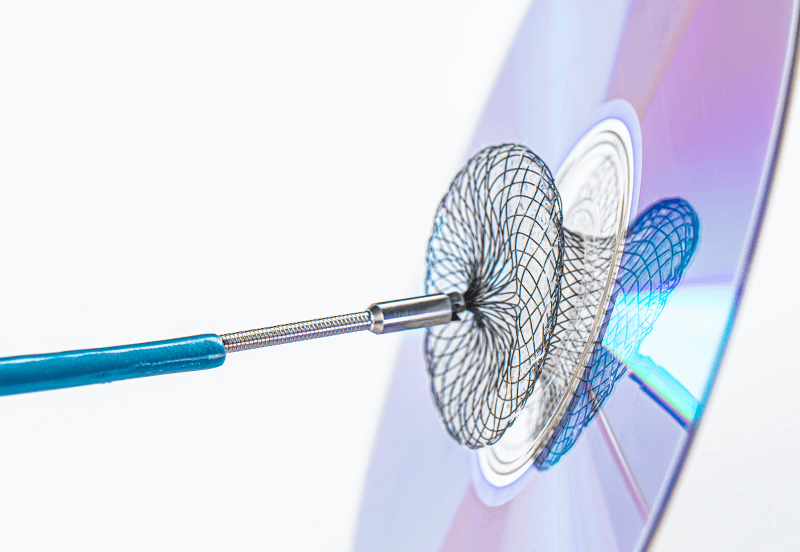
Even though percutaneous left atrial appendage (LAA) closure is generally safe, device embolization – with 0 to 1.5% global incidence – is still a clinically relevant complication. This review summarizes the current evidence on the most common devices (Watchman FLX, Amplatzer Amulet y LAmbre), looks at anatomical and technical factors increasing migration risk and details the most effective prevention and therapeutic strategies to manage it.
The primary outcome was embolization rate reported in international studies and registries. Secondary outcomes included anatomical predictors, timing, migration location, percutaneous retrieval success rate, need for surgery and associated clinical outcomes.
Current occluders show fairly low embolization rates. The Watchman FLX has shown 0 to 0.9% incidence, with significantly lower risk vs. its prior version (OR 0.35; IC95% 0.18–0.70; p < 0.02). Registries such as the PINNACLE FLX and SURPASS FLX have reported 0% and 0.04% rates, respectively. The Amplatzer Amulet presented 0.6 to 0.9% incidence, while the LAmbre reported practically 0% in most series, except for a 1.7% rate observed in one center conducting procedures without contrast. Also, studies have shown that high volume centers present lower embolization rates (0.6% vs 1.5% in low volume centers).
Read also: Coronary Perforations and Use of Covered Stents: Safe and Effective Long-Term Strategy?
Migration predictors include cactus-type appendages, wide ostial necks, shallow LAA depth, and rhythm-related variations that modify ostial anatomy (atrial fibrillation vs sinus rhythm). The NCDR LAAO study showed greater number of late embolizations in patients in sinus rhythm at implantation, possibly due to LLA missizing. Most events happen within the first 24 hours, except for migration to peripheral arteries (>45 days). The most frequent migration locations are the aorta (37%), left ventricle (33.3%), left atrium (24.3%) and peripheral vessels (4.6%). Migration to the left ventricle has the worst prognosis and requires surgery in 44.4% of cases.
The most effective prevention strategies include adequate planning with 3D transesophageal echocardiography or cardiac CT, adequate sizing using PASS (Watchman) and CLOSE (Amulet) criteria, combined use of fluoroscopy and transesophageal echocardiography during the procedure, avoiding implantation in collapsed atria (<12 mmHg) and confirming device position with echocardiography before discharge.
Read also: A New Asymptomatic Carotid Stenosis Paradigm? CREST-2 Trial Unified Results.
The recommended initial management is percutaneous retrieval, with success rate close to two thirds of patients. Surgical management is reserved for failed first attempts, hemodynamic instability or severe valve damage. The first failed attempt increases mortality from 2.9% to 21.4%, with highlights the importance of an experienced operator. In stable patients with devices lodge in the descending aorta, a conservative management may be considered.
Conclusion
In sum, though infrequent, device embolization remains a serious complication. It has around 1% incidence, with no significant differences among modern devices. Detailed planning, correct sizing and operator experience are still of vital importance. Advances in design and retrieval techniques continue to improve the safety of this rapidly expanding procedure.
Original Title: Embolization of left atrial appendage occluders: review of the current evidence.
Reference: Miguel A. Martín-Arena, et al. REC Interventional Cardiology, 2025.
Subscribe to our weekly newsletter
Get the latest scientific articles on interventional cardiology



