






Percutaneous left atrial appendage (LAA) closure is an alternative therapeutic strategy for reducing the risk of stroke in patients with atrial fibrillation (AF). Randomized clinical trials have demonstrated that LAA closure is non-inferior to oral anticoagulation (OAC) after long-term follow-up.
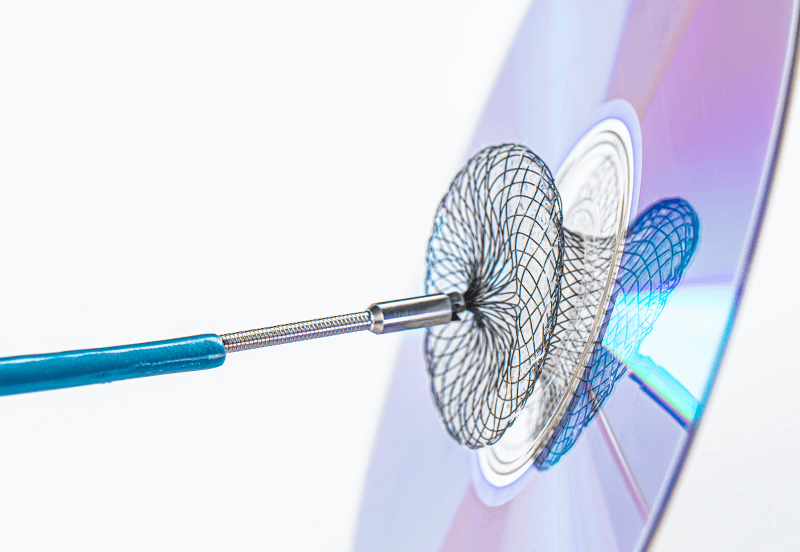 The Watchman device (Boston Scientific) was approved by the U.S. Food and Drug Administration (FDA) in 2015 to reduce the risk of thromboembolism originating from the LAA in patients with non-valvular AF who are at increased risk of stroke and systemic embolism and have an appropriate rationale for seeking a non-pharmacological alternative to warfarin.
Several clinical trials have confirmed the safety and efficacy of the Watchman device for stroke prevention; however, additional LAA occlusion devices are being developed to better accommodate the anatomical variability of the appendage and facilitate implantation.
The AnchorMan device (MicroPort CardioFlow) is a novel LAA closure system with enhanced anatomical adaptability, designed as an alternative to the Watchman device to improve implantation ease and procedural safety.
In this context, the results of the SAFE-PROTECT trial, a multicenter, randomized, non-inferiority study, were presented. The trial was designed to compare the safety and efficacy of the AnchorMan device versus Watchman in terms of stroke prevention and successful left atrial appendage (LAA) closure.
A total of 216 patients with non-valvular AF and a high risk of stroke were enrolled (mean CHA₂DS₂-VASc score of 4.0 ± 1.4 in the AnchorMan group).
The Primary Endpoint was clinical success at 12 months, defined as the absence of ischemic or hemorrhagic stroke, systemic embolism, and cardiovascular or unexplained death. The Secondary Endpoint was successful LAA closure, assessed by transesophageal echocardiography as a peri-device leak <5 mm at 12 months.
Read also: Redo-TAVI with SAPIEN 3: 30-Day Outcomes.
At the 12-month follow-up, AnchorMan demonstrated non-inferiority to Watchman (98.1% vs. 98.1%; non-inferiority p=0.0004). Both devices achieved a 100% procedural success rate for LAA closure (peri-device leak <5 mm). In addition, AnchorMan showed a significantly lower incidence of peri-device leak (PDL) >3 mm compared with Watchman (5.7% vs. 15.6%; p=0.04). Rates of all-cause mortality, stroke, major bleeding, and device-related complications were low and comparable between the two groups.
Conclusion: AnchorMan Demonstrated Non-Inferiority to Watchman and Achieved Superior Left Atrial Appendage Sealing at 12 Months
The SAFE-PROTECT trial demonstrated that the AnchorMan device is a safe and effective alternative to the Watchman 2.5 for stroke prevention in patients with atrial fibrillation. Its innovative design provides superior LAA sealing, with a lower incidence of peri-device leaks >3 mm, a finding that may translate into improved long-term clinical protection.
Original Title: Left atrial appendage closure with the AnchorMan or Watchman devices: 12-month results of the SAFE-PROTECT randomised trial.
Reference: EuroIntervention 2026;22:e720-e729 • Binhao Wang et al.



