






Courtesy of Dr. Carlos Fava.
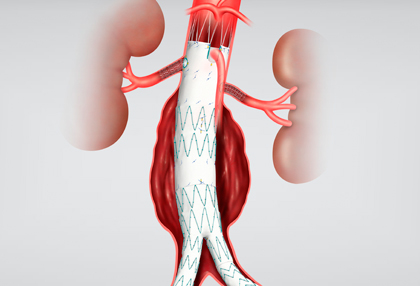 Thoraco-abdominal aneurysms (TAAA) are a real challenge for surgeons. So far, endovascular repair have rendered good results in these aneurysms, but branch occlusion continues to be their Achilles’ heel”.
449 patients were analyzed, 235 (52%) were treated with branched devices (BEVAR) and 214 (48%) with fenestrated devices (FEVAR). Endoprosthesis were Cook Medical.
Mean age in both groups was 70, and except for more men and more smokers in the FEVAR group, there were no significant differences between them.
856 vessels were revascularized, 445 by BEVAR and 411 by FEVAR. Technical success was 95% with BEVAR and 99% with FEVAR (p=0.01), during the first 24 hours; those receiving BEVAR presented 2% renal occlusion and 2.1% mortality.
Follow up was at 20 months; reintervention rate was similar in both groups (4.7% vs. 5.2%) but renal branch occlusion was higher with BEVAR (9.6% vs. 2.3%; p<0.01).
At two years, freedom from renal occlusion was higher with FEVAR (90.4% vs. 97.1%; p<0.01) with no difference in global renal function, but renal occlusion rate was higher following BEVAR.
Mortality after ruptured aneurysm was six for each group and survival rate at two years was similar (73.4% vs. 80.9%).
Conclusion
At med-term follow up, renal evolution with endoprosthesis in toraco-abdominal aneurysms is satisfactory. Fenestrated devices are associated with lower renal occlusion, compared to branched prosthesis.
Editorial Comment
These strategies have solved a great problem for surgery, and show good results in different series.
Even though the FEVAR prosthesis have shown fairly better performance in different series, they are tailored specifically to each patient’s anatomy, and are therefore more expensive.
Eventually, the development of better devices and 3D printers will make this great challenge easier for interventionists.
Original Title: Mid-Term Outcomes of Renal Branches Versus Renal Fenestrations for Thoraco-abdominal Aneurysm Repair.
Reference: T. Martín Gonzalez. Eur J Vasc. Endovasc Surg 2016;52:141-148
Courtesy of Dr. Carlos Fava. Favaloro Foundation, Buenos Aires, Argentina.
We value your opinion. You can leave your comments, thoughts, questions or suggestions here below.



