






Post-thrombotic syndrome (PTS) is one of the most limiting sequelae following proximal deep vein thrombosis (DVT). It clinically manifests as chronic pain, edema, skin changes, and venous ulcers, with a direct impact on daily activities and quality of life.
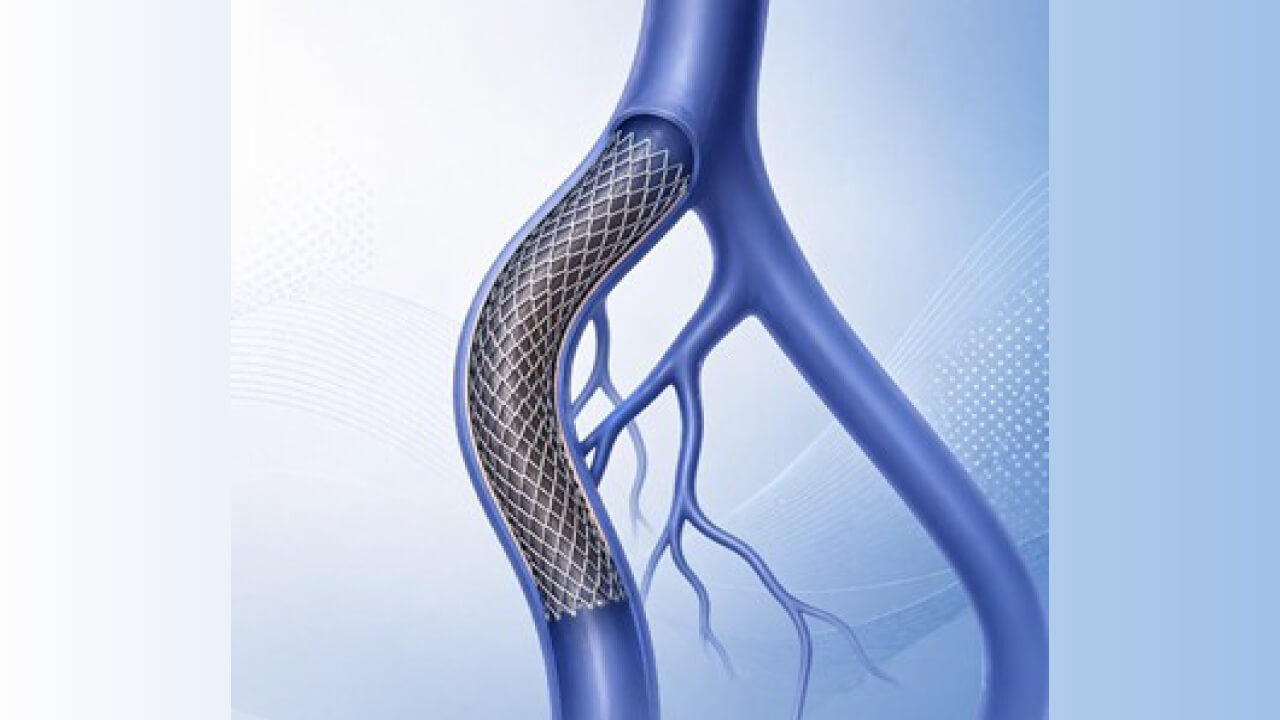
The C-TRACT study aimed to evaluate whether an endovascular treatment strategy with iliac venous stent implantation, combined with antithrombotic therapy and standard PTS care, could reduce the clinical severity of the disease compared with standard treatment alone.
This was a multicenter, randomized, open-label trial with blinded event adjudication, conducted across 29 centers in the United States. Patients with moderate to severe PTS and imaging-confirmed iliac venous obstruction were included. Randomization was 1:1 to endovascular therapy plus standard treatment or standard treatment alone.
The primary endpoint (PE) was PTS severity at 6 months, assessed using the Venous Clinical Severity Score (VCSS). Secondary endpoints included disease-specific quality of life, global quality of life, Villalta score, affected calf volume, presence of venous ulcer, bleeding events, symptomatic recurrence of venous thromboembolism, and mortality.
Read also: Complex PCI: higher ischemic and bleeding risk in contemporary practice.
A total of 224 patients were randomized, with a mean age of 56.1 years, nearly half female, and a baseline VCSS of 12.5 points. In the endovascular arm, the procedure was performed at a mean of 16 days after randomization, and stent implantation was successful in 96.1% of cases (mainly Abre stents). At 6 months, the primary endpoint favored the invasive strategy, with a VCSS of 8.1±5.1 vs 10.0±4.9, corresponding to an adjusted difference of -2.0 points (95% CI: -3.2 to -0.8; p=0.001), consistent across sensitivity analyses.
Regarding quality of life, the VEINES-QOL score was 62.8±24.6 vs 48.6±26.7, with an adjusted difference of 14.5 points (95% CI: 9.5 to 19.4; p<0.001). The Villalta score was also lower in the endovascular group (8.2±5.7 vs 12.3±6.4; difference of -4.1 points; 95% CI: -5.5 to -2.7). No differences were observed in calf volume or the presence of open venous ulcers at 6 months.
Read also: High Ischaemic Risk Criteria in Chronic Coronary Syndrome: Prevalence and Prognosis.
In terms of safety, the endovascular group showed a higher incidence of bleeding. Total bleeding occurred in 11.6% of the endovascular group and 3.6% of the control group, with a relative risk of 3.22 (95% CI: 1.07 to 9.69; p=0.03), mainly driven by non-major bleeding. Symptomatic recurrence of venous thromboembolism was low and similar between groups (2.7% vs 3.6%), as was mortality.
Conclusions: Iliac venous stenting reduces post-thrombotic syndrome severity at 6 months
In patients with moderate to severe post-thrombotic syndrome and iliac obstruction, a strategy of venous angioplasty with stent implantation, combined with intensified antithrombotic therapy, reduced clinical severity and significantly improved quality of life at 6 months compared with standard treatment alone.
Original Title: Endovascular Therapy for Post-Thrombotic Syndrome – A Randomized Trial.
Reference: Vedantham S, Kahn SR, Marston WA, Weinberg I, Sista AK, Magnuson EA, Cohen DJ, Wasan SM, Razavi MK, Goldhaber SZ, Sanfilippo KM, Comerota AJ, Azene EM, Chaar CIO, Leung DA, Kolli KP, Kalva SP, Rostambeigi N, Desai A, Desai KR, Tafur AJ, Khalsa B, Majerus E, Wang B, Wang Y, Nieters P, Derfler MC, Oliver A, Hardy C, Bashir R, Winokur R, Weger N, Khaja MS, Sharma A, Mani N, Kavali P, Thukral S, Lake LL, Mikkelsen K, Parpia S; C-TRACT Trial Investigators. Endovascular Therapy for Post-Thrombotic Syndrome – A Randomized Trial. N Engl J Med. 2026 Apr 13:10.1056/NEJMoa2519001. doi: 10.1056/NEJMoa2519001. Epub ahead of print. PMID: 41972998; PMCID: PMC13078690.
Subscribe to our weekly newsletter
Get the latest scientific articles on interventional cardiology



 es una de las secuelas más limitantes luego de una trombosis venosa profunda (TVP) proximal.)