



Excellent Outcomes for the First Sirolimus Eluting Balloon Tested on Instent Restesosis

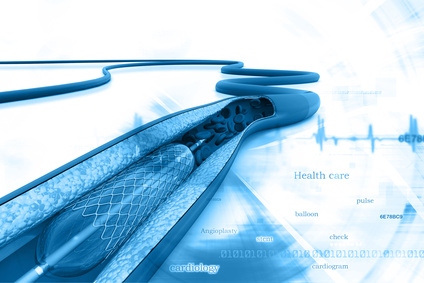
Much has been done since studies on conventional balloon angioplasty for BMS instent restenosis showed over 40% new revascularization. 
El primer balón liberador de sirolimus probado en reestenosis intrastent demostró excelentes resultados

Drug eluting stents, aimed at improving this problem, have never achieved 0% restenosis, which is why technologies such as paclitaxel coated balloons have been developed, with reasonable efficacy (8% to 10% reinterventions rate for BMS restenosis and 17% to 23% for DES restenosis).


Paclitaxel is less effective against restenosis than the Limus family of drugs, but it offers the advantage of rapid diffusion in tissues, which is key in drug coated balloons.


Read also: An Important Study Shows That Renal Function Must Be Cared for in TAVR”.


The sirolimus eluting balloon Virtue solved the problem by encapsulating the drug into nanoparticles, which rapidly transferred through the porous balloon. This prevents drug waste, which is the case of paclitaxel balloons.


This is the first in human trial with this new device, to assess, basically, feasibility. It included 50 patients with restenosis with angiographic 6 month and clinical 12 month follow up.


Primary efficacy end point at 6 months was late lumen loss, which resulted in 0.31±0.52 mm, and secondary end point was binary restenosis, which reached 19.1%.


Read also: Bioresorbable Scaffolds Must Not Be Chosen Over Current DES”.


At one year, target vessel failure was 12.2% for the intention to treat population and 2.8% for the per-protocol population.


Conclusion

The first in human trial of the sirolimus eluting balloon Virtue showed excellent outcomes, which guarantees future randomized studies.


Editorial Comment

The great difference in target vessel failure in the intention to treat population vs. per- protocol population was due to major protocol violations that excluded 14 patients out of the total 50.


Original title: The SABRE Trial (Sirolimus Angioplasty Balloon for Coronary In-Stent Restenosis) Angiographic Results and 1-Year Clinical Outcomes.

Refrerence: Stefan Verheye et al. J Am Coll Cardiol Intv 2017. Article in press.


Subscribe to our weekly newsletter

Get the latest scientific articles on interventional cardiology

We are interested in your opinion. Please, leave your comments, thoughts, questions, etc., below. They will be most welcome.

More articles by this author

Hybrid Coronary Revascularization versus Conventional Bypass Surgery in Left Main Coronary Artery Disease

Significant left main coronary artery (LMCA) disease continues to represent a therapeutic challenge, particularly in patients with complex multivessel disease and high SYNTAX scores,...

Comparison of strategies: NMA of IVUS, OCT, or angiography in complex lesions

Percutaneous coronary intervention (PCI) in complex lesions continues to represent a technical challenge in contemporary interventional cardiology. Angiography, although it remains the most widely...

Dynamic Coronary Roadmap: does it really help reduce contrast use?

Contrast-induced nephropathy remains a relevant complication of percutaneous coronary interventions (PCI), particularly in patients with multiple comorbidities and complex coronary anatomies. Dynamic Coronary Roadmap...

Long-Term Cardiovascular Risk in Patients With ANOCA: A Clinical Reality to Consider?

Chronic stable angina (CSA) remains one of the most frequent reasons for referral to diagnostic coronary angiography (CAG). In a substantial proportion of these...

LEAVE A REPLY

Please enter your comment!
Please enter your name here

Related Articles

SOLACI Sessionsspot_img

Recent Articles

TEER plus optimal medical therapy versus medical therapy alone in functional mitral regurgitation

Mitral regurgitation (MR) is a highly prevalent valvular heart disease that, in advanced stages and when left untreated, is associated with reduced quality of...

Hybrid Coronary Revascularization versus Conventional Bypass Surgery in Left Main Coronary Artery Disease

Significant left main coronary artery (LMCA) disease continues to represent a therapeutic challenge, particularly in patients with complex multivessel disease and high SYNTAX scores,...

VECTOR: First Percutaneous Aorto-Coronary Bypass Case, a New Conceptual Approach

Coronary obstruction represents one of the most severe complications associated with transcatheter aortic valve implantation, particularly in valve-in-valve scenarios involving surgical bioprostheses, narrow aortic...
