



Edge Restenosis with Everolimus Eluting Stents: a few Predictors

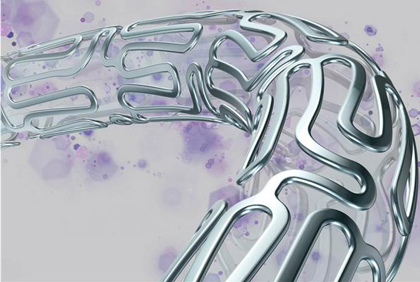
Edge Restenosis with Everolimus Eluting StentsStent edge restenosis continues to be a weakness of drug eluting stents (DES). The aim of this study was to determine its predictors using optical coherence tomography (OCT).


The study retrospectively analyzed 319 patients receiving OCT immediately after everolimus eluting stent implantation (EES) looking into the immediate outcome, and follow up angiography at 9 and 12 months.


Binary angiographic stent edge restenosis was 10%. OCT more often showed lipidic plaque in patients with stent edge restenosis vs. those without it. (61% vs. 20%; p<0.001), as well as smaller minimal lumen area (4.13±2.61 vs. 5.58±2.46 mm2; p=0.001). Multivariable analysis confirmed these two variables are significant predictors of stent edge restenosis.


A lipidic arc of 185° (sensitivity: 71%; specificity: 72%; area under the curve: 0.761) and minimal lumen area of 4.10 mm2 (sensitivity: 67%; specificity: 77%; area under the curve: 0.787) were the ideal cutoff values to predict stent edge restenosis.


These results do not come as a surprise since it is well known that plaque in the distal or proximal stent edges and stent underexpansion are restenosis predictors.


Conclusion

OCT provides decisive information on optimal stent diameter and expansion to select the right stent length, which in turn will allow us to cover the whole plaque.


Original Title: Optical Coherence Tomography Predictors for Edge Restenosis after Everolimus-Eluting Stent Implantation.

Reference: Ino Y et al. Circ Cardiovasc Interv. 2016 Oct; 9(10).


Subscribe to our weekly newsletter

Get the latest scientific articles on interventional cardiology

We are interested in your opinion. Please, leave your comments, thoughts, questions, etc., below. They will be most welcome.


More articles by this author

Plaque Ruptures in Non-Culprit Arteries: Follow-Up With Intravascular Imaging

Plaque rupture remains one of the most important pathophysiological mechanisms in acute coronary syndromes. However, not all ruptures manifest clinically as ischemia, myocardial infarction,...

OCT-Detected High-Risk Plaques Predict Recurrent Events After Myocardial Infarction

After a myocardial infarction (MI), non-culprit lesions are often deferred when they are not flow-limiting (negative FFR). However, these lesions continue to represent an...

Ticagrelor vs Clopidogrel in ACS Patients Receiving DOAC After PCI: More Bleeding Without Ischemic Benefit?

In patients with acute coronary syndrome (ACS) who require direct oral anticoagulation (DOAC) and undergo percutaneous coronary intervention (PCI), current guidelines recommend a dual...

EuroPCR 2026 | 10-Year Left Main PCI: When Survival Is Similar, Should the Less Invasive Strategy Prevail?

The primary goal of revascularization in left main coronary artery disease (LMCA) is to improve survival. However, debate continues regarding whether, in anatomically suitable...

LEAVE A REPLY

Please enter your comment!
Please enter your name here

Related Articles

SOLACI Sessionsspot_img
Jornadas Guatemala 2026

Recent Articles

Plaque Ruptures in Non-Culprit Arteries: Follow-Up With Intravascular Imaging

Plaque rupture remains one of the most important pathophysiological mechanisms in acute coronary syndromes. However, not all ruptures manifest clinically as ischemia, myocardial infarction,...

Drug-Eluting Stents in Peripheral Arterial Disease: When Should They Be Used?

Peripheral drug-eluting stents have transformed the treatment of peripheral arterial disease by reducing restenosis rates and the need for repeat interventions. However, the emergence...

OCT-Detected High-Risk Plaques Predict Recurrent Events After Myocardial Infarction

After a myocardial infarction (MI), non-culprit lesions are often deferred when they are not flow-limiting (negative FFR). However, these lesions continue to represent an...
