



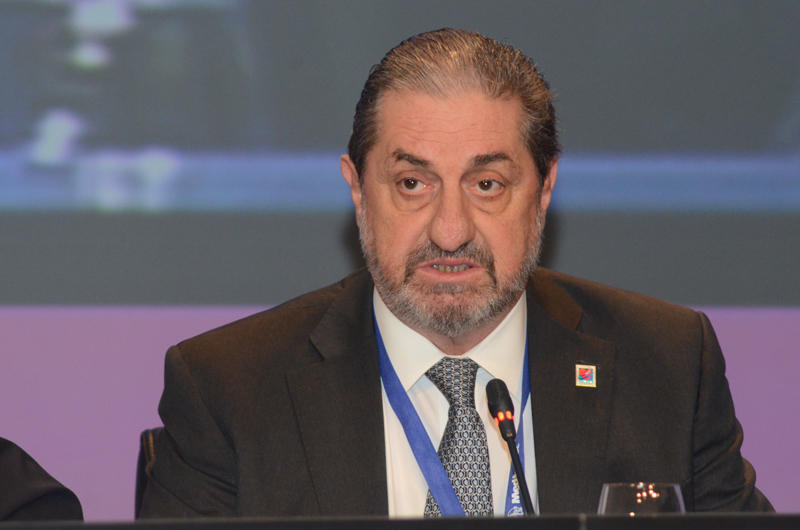
SOLACI CACI 2017 | Tipo II Endoleaks: Tratamiento obligatorio o un miedo infundado

Dr. Hugo Londero
Dr. Hugo Londero

Read articles on the main presentations of the second day of SOLACI-CACI 2017 Congress.

See the presentation by Dr. Hugo Londero, entitled “Tipo II Endoleaks: Tratamiento obligatorio o un miedo infundado”.

3Londero-HugoTypeII


Subscribe to our weekly newsletter

Get the latest scientific articles on interventional cardiology

We are interested in your opinion. Please, leave your comments, thoughts, questions, etc., below. They will be most welcome.


More articles by this author

Impact of Baseline Systolic Blood Pressure on Blood Pressure Changes Following Renal Denervation

Renal denervation (RDN) is a guideline-recommended therapy to reduce blood pressure in patients with uncontrolled hypertension, although uncertainties remain regarding which factors best predict...

Hypertriglyceridemia as Key Factor to Abdominal Aortic Aneurysm Development and Rupture: Genetic and Experimental Evidence

Abdominal aortic aneurysm (AAA) is a deadly vascular disease with no effective drug treatment, and risk of rupture reaching up to 80%. Even though...

Atrial Fibrillation and Chronic Kidney Disease: Outcomes of Different Stroke Prevention Strategies

Atrial fibrillation (AF) affects approximately 1 in every 4 patients with end-stage renal disease (ESRD). This population carries a high burden of comorbidities and...

Safety of Prophylactic Spinal Fluid Drainage in Open and Endovascular Repair of Thoracic and Thoracoabdominal Aortic Aneurysms

Spinal cord injury remains one of the most devastating complications of thoracic and thoracoabdominal aneurysm repair, mainly associated to a compromised the Adamkiewicz artery...

LEAVE A REPLY

Please enter your comment!
Please enter your name here

Related Articles

SOLACI Sessionsspot_img

Recent Articles

Coronary Perforations and Use of Covered Stents: Safe and Effective Long-Term Strategy?

Coronary perforations remain one of the most serious complications of percutaneous coronary intervention (PCI), especially in cases of Ellis ruptures type III. In these...

Is it really necessary to monitor all patients after TAVR?

Conduction disorders (CD) after transcatheter aortic valve replacement (TAVR) are a frequent complication and may lead to the need for permanent pacemaker implantation (PPI)....

Is it really necessary to monitor all patients after TAVR?

Conduction disorders (CD) after transcatheter aortic valve replacement (TAVR) are a frequent complication and may lead to the need for permanent pacemaker implantation (PPI)....
