






This device, an abluminal groove-filled biodegradable-polymer sirolimus-eluting stent manufactured in China, showed very similar efficacy and safety to the “gold standard” everolimus eluting Xience at 2-year follow up, according to the TARGET outcomes, presented yesterday at the EuroPCR 2019 and simultaneously published in J Am Coll Cardiol Intv.
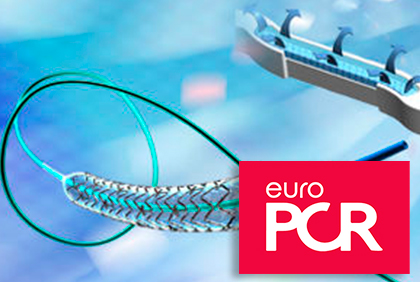
The device, which is manufactured in China and received CE Mark approval in 2015, has recessed abluminal grooves that allow controlled release of sirolimus (90% of the drug is released over the first 90 days). Its polymer degrades within 6 to 9 months. Xience, meanwhile, has a durable polymer and releases nearly all of its everolimus within 120 days.
Firehawk is designed to reduce drug concentration and drug burden in the vessel wall, releasing only the necessary from the abluminal wall.
Firehawk one-year outcomes were presented at this same event in 2018, and now the 2 year-outcomes confirm the good news.
Lea también: EuroPCR 2019 | BASKET-SMALL 2: Drug-Coated Balloons vs. DES in Small Vessels.
The TARGET was a multicenter non-inferiority study carried out at 21 centers in 10 European countries that included 1653 all comers with symptomatic coronary artery disease or asymptomatic but with objective evidence of ischemia to receive the Firehawk (Shanghai MicroPort Medical Group) or the Xience (Abbott Vascular).
Nearly 9% of the population was treated in the context of STEMI. 94.5% of patients completed follow-up or died during this period.
Primary combined end point of target vessel failure (cardiac death, target vessel MI or ischemia driven revascularization) resulted practically identical between devices (Firehawk 8,7% vs Xience 8.6%), as were the individual components.
Patient oriented end points (all cause death, any MI or any revascularization) occurred in 19.3% of the Firehawk cohort and 17.8% of the Xience cohort (p=0.46).
Lea también: EuroPCR 2019 | Intravascular Imaging Almost Indispensable for Planning an Angioplasty.
Definite/probable thrombosis was a rare event and occurred in 0.4% of patients receiving the Firehawk vs. 0.9% of patients receiving the Xience after one year (p=0.34).
There is no evidence of clinical advantage with the Chinese device (as all studies on resorbable vs. durable polymers have shown), though patients will be followed up to 5 years.
With practically identical results and lower costs, the Firehawk aims at entering more markets and becoming a real competitor against the classic stents.
Original Title: Two-year clinical outcomes of an abluminal groove-filled biodegradable polymer sirolimus-eluting stent compared to a durable polymer everolimus-eluting stent.
Reference: Xu B et al. J Am Coll Cardiol Intv. 2019; Epub ahead of print.
Subscribe to our weekly newsletter
Get the latest scientific articles on interventional cardiology
We are interested in your opinion. Please, leave your comments, thoughts, questions, etc., below. They will be most welcome.



