






Courtesy of Dr. Carlos Fava.
TAVR has been shown beneficial and is constantly being advanced onto lower risk populations, but at present, it is limited (perhaps most importantly in aortic tricuspid valves) by the need for permanent pacemaker implantation (PPMI), especially when it comes to self-expandable valves, as the latest study on low risk populations has shown.
 The study looked at 248 severe aortic stenosis patients receiving self-expandable valves EVOLUTE, EVOLUTE PRO and EVOLUTE XL 34. They analyzed looked at implant depth at non-coronary cusp level (SNC).
The procedure was done via femoral access with conscious sedation and local anesthesia.
Mean age was 83, most patients were men, 5.7% had left bundle branch block, 14.9% had right bundle branch block. Mortality STS score was 6%.
Read also: Latin American Session at TCT 2019.
Post procedural stroke was 2.4% and in-hospital death, and at 30 days was 0.4% and 1.2% respectively.
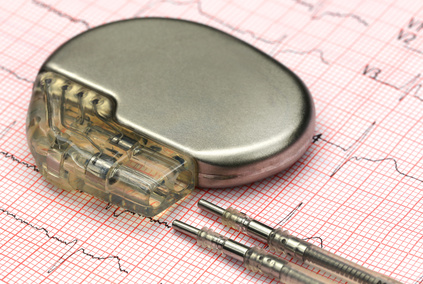
The need for PPMI was 9.7%, mostly within the first 72 hours (22 of 24 patients). There were no clinical differences between patients requiring PPMI and those who did not.
PPMI predictors were: right bundle branch block, large aortic annulus and aortic root, length of septum: when <5 mm, the need for PPMI was 95% (23-24 patients) but when >5 mm, it was 1.4%.
At multivariable analysis, implant depth >membranous septum (odds ratio: 8.04; 95% confidence interval: 2.58 to 25.04; p < 0.001) and the Evolut 34 XL (odds ratio: 4.96; 95% confidence interval: 1.68 to 14.63; p= 0.004) were independent predictors of PPMI.
Read also: Should Interventional Cardiologists Be Involved in Acute Stroke?
The MIDAS approach (minimum depth in reference to septum), was done in 1200 patients aiming at positioning the device at a depth of < MS length whenever possible, reduced the need for PPMI (9% vs. 3% p=0.003) and the rate of new left bundle branch block (25.8% vs. 9% p>0.001).
Conclusion
The use of MIDAS for self-expandable valve implantation achieved a low and predictable rate of need for PPMI that was significantly inferior to the one previously reported.
Courtesy of Dr. Carlos Fava.
Original Title: Minimizing Permanent Pacemaker Following Repositionable Self-Expanding Transcatheter Aortic Valve Replacement.
Reference: Hasan Jilaihawi, et al. Am Coll Cardiol Intv 2019;12:1796–807.
Get the latest scientific articles on interventional cardiologySubscribe to our weekly newsletter
We are interested in your opinion. Please, leave your comments, thoughts, questions, etc., below. They will be most welcome.



