In November 2019, during the American Heart Association (AHA) 2019 Scientific Sessions, researchers presented this revolutionary trial that called the attention of all cardiologists. We had to wait until March to read the fine print; back then, a global pandemic such as the current one seemed out of a science-fiction tale.
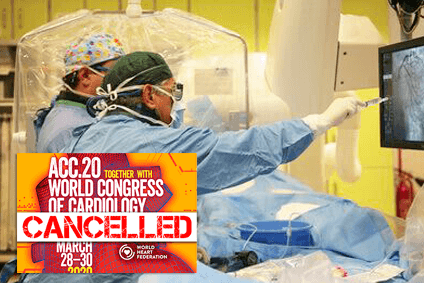
The world has changed a lot in the past 4 months, but ISCHEMIA still arrived to a journal (we expected nothing short of the New England Journal of Medicine [NEJM]) and was presented virtually at the American College of Cardiology (ACC) 2020 Scientific Session.
There may be some uncertainty as regards the interpretation of the ISCHEMIA results, since they depend on the definition of infarction chosen, which obviously has an impact on the events. There clearly is no obvious advantage of one strategy over the other (initially invasive with eventual revascularization vs. optimal medical treatment) after 4 years of follow-up.
These findings highlight the huge benefit derived from contemporary medical treatment in coronary artery disease. In that sense, guidelines adherence must be strict.
Read also: Virtual ACC 2020 | More data from ISCHEMIA: Women with More Symptoms but Less Ischemia.
Patients with stable coronary artery disease matching the profile of patients randomized in ISCHEMIA can be initially managed with a conservative strategy, unless their angina levels are unacceptable (in that case, an invasive strategy has proven to be superior). Revascularization (angioplasty or surgery) is more effective than optimal medical treatment only as far as symptom relief goes. In that sense, it is a reasonable strategy.
The ISCHEMIA trial was conducted at 320 sites in 37 countries and included 5179 patients with stable coronary artery disease, preserved ejection fraction, and moderate or severe ischemia based on imaging studies or exercise tolerance tests. More than 50% of the study population had baseline severe ischemia.
All patients were randomized to an invasive strategy with coronary angiography and angioplasty, if needed, on top of optimal medical therapy vs. an initially conservative strategy with optimal medical treatment alone.
Read also: Virtual ACC 202 | Vericiguat: New Hope in Chronic Cardiac Failure.
Randomization was done prior to a computerized tomography (CT) angiography blinded for researchers. Such study was done in approximately two-thirds of the enrolled population and served to exclude “dangerous” disease (left main disease or similar) and to verify that there was, indeed, coronary artery disease.
The primary endpoint at 6 months was 5.3% with the invasive strategy vs. 3.4% with the conservative strategy; at 5 years, the cumulative event rates were 16.4% and 18.2%, respectively (95% CI: −4.7 to 1.0).
Patients in the invasive-strategy group initially experienced more peri-procedural infarctions (something that happens in any study with an invasive arm), and fewer nonprocedural infarctions during follow-up. All-cause mortality was low and similar between groups.
The secondary definition of infarction used in ISCHEMIA includes peri-procedural infarction. If we used it, we might conclude that a conservative strategy is superior. However, authors decided not to use that secondary definition in the article due to abundant evidence of a huge prognostic difference between a peri-procedural infarction and a spontaneous infarction. Such is the enormous importance of the fine print in definitions.
ischemia-fullOriginal Title: Initial invasive or conservative strategy for stable coronary disease.
Reference: Maron DJ et al. N Engl J Med. 2020 y presentado en forma virtual en el ACC 2020.
Subscribe to our weekly newsletter
Get the latest scientific articles on interventional cardiology
We are interested in your opinion. Please, leave your comments, thoughts, questions, etc., below. They will be most welcome.