






Magnetic resonance (MR) and fractional flow reserve (FFR) correlate moderately as regards the assessment of non-culprit lesions in patients admitted with acute myocardial infarction who underwent primary angioplasty. For a similar degree of diagnostic accuracy, we would require a visual, semiquantitative, or fully quantitative comprehensive assessment of lesions.
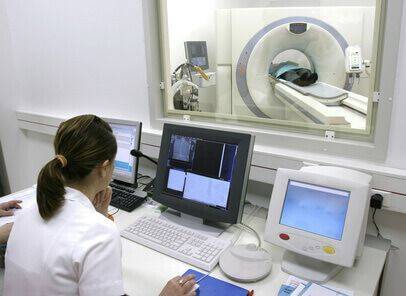
This work, soon to be published in J Am Coll Cardiol Img, looked into the degree of correlation between FFR and MR in the assessment of non-culprit lesions after an infarction.
The study included 77 patients who underwent primary angioplasty and had at least one non-culprit lesion with intermediate stenosis (between 70% and 90%). All patients were assessed through FFR and MR one month after infarction. The MR protocol included stress and rest perfusion, cine imaging, and late gadolinium enhancement. Fully quantitative, semiquantitative, and visual analysis of myocardial perfusion were compared against a reference FFR.
Read also: Predilation in TAVR: Definitive Data for Easier Decision-Making?
Visual analysis through MR displayed an area under the curve of 0.74, with a sensitivity of 73% and a specificity of 70%. The semiquantitative analysis had results similar to those derived from the visual analysis. The MR myocardial blood flow was slightly better than the other parameters, but it still was far from perfect (an area under the curve of 0.82, with a sensitivity of 82% and a specificity of 71%).
Conclusion
Cardiac magnetic resonance and invasive fractional flow reserve have a moderately good correlation as regards non-culprit lesions in patients who suffered from an acute myocardial infarction. All MR parameters yielded a similar diagnostic performance and do not seem enough to replace FFR.
Original Title: Cardiac Magnetic Resonance for Evaluating Nonculprit Lesions After Myocardial Infarction Comparison With Fractional Flow Reserve.
Reference: Henk Everaars et al. J Am Coll Cardiol Img 2020, article in press.
Subscribe to our weekly newsletter
Get the latest scientific articles on interventional cardiology
We are interested in your opinion. Please, leave your comments, thoughts, questions, etc., below. They will be most welcome.



