



EuroPCR 2020 | EVOQUE: New Transcatheter Mitral Valve Replacement System, Promises at Short Term and Future Hope

Transeptal transcatheter mitral valve replacement offers a less invasive alternative vs. surgery and with fewer anatomical limitations than transcatheter repair (e.g. MitraClip) in patients with severe mitral valve failure. 
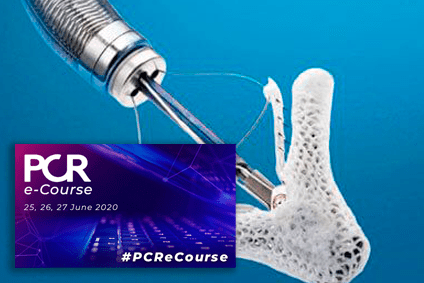
EuroPCR 2020 | EVOQUE: nuevo sistema de reemplazo mitral por catéter, promesas a corto plazo y esperanzas para el futuro

The first patients treated with the new system EVOQUE were included between September 2018 and October 2019 and its outcomes were presented at the virtual EuroPCR 2020 and were simultaneously published in JACC: Cardiovascular Interventions.

Inclusion criteria were moderate to severe Mitral failure, functional class II or higher and high or prohibitive surgical risk. Primary end point was technical success according to the Mitral Valve Academic Research Consortium criteria.

Fourteen patients with mean age 84 and 4.6% STS (it was a “first in human” study) were included. Mitral failure resulted at least moderate to severe in all of them, even though etiology varied (28.6% degenerative, 21.4% functional and 50% mix).


Read also: EuroPCR 2020 | Sudden Death Increase Two to Three Times While MI Rate Falls.


Technical success was achieved in 92.9% of the population. The only patient that could not receive the device received surgery.

At 30 days, one patient died of non-cardiovascular causes (7.1%) and there were two strokes (14.3%). There were no infarctions or rehospitalizations. 

One patient underwent alcohol septal ablation for left ventricular outflow tract obstruction and two required paravalvular leak closure. Despite this, at 30 days all patients presented mild mitral failure and, in fact, over 80% of the population presented no mitral failure at all. 

Conclusion

This first test in humans for the transseptal EVOQUE mitral valve device showed feasibility. We need more time and further research to determine its clinical safety and efficacy. 

EVOQUE

Original Title: Transcatheter Mitral Valve Replacement with the Transseptal EVOQUE System.

Reference: J. Webb et al. JACC: Cardiovascular Interventions 2020, article in press. doi: https://doi.org/10.1016/j.jcin.2020.06.040 y presentado en el EuroPCR virtual 2020.


Subscribe to our weekly newsletter

Get the latest scientific articles on interventional cardiology

We are interested in your opinion. Please, leave your comments, thoughts, questions, etc., below. They will be most welcome.


More articles by this author

Long-Term Predictors of Valve Deterioration After TAVI

Transcatheter aortic valve implantation (TAVI) has become an innovative technology for the treatment of patients with severe aortic valve stenosis. Initially implemented in elderly...

Coronary access after TAVI with fourth- and fifth-generation Evolut valves: the EPROMPT-CA study

The expansion of transcatheter aortic valve implantation (TAVI) toward younger and lower-risk patients has increased the relevance of post-procedural coronary access. In this context,...

TEER plus optimal medical therapy versus medical therapy alone in functional mitral regurgitation

Mitral regurgitation (MR) is a highly prevalent valvular heart disease that, in advanced stages and when left untreated, is associated with reduced quality of...

VECTOR: First Percutaneous Aorto-Coronary Bypass Case, a New Conceptual Approach

Coronary obstruction represents one of the most severe complications associated with transcatheter aortic valve implantation, particularly in valve-in-valve scenarios involving surgical bioprostheses, narrow aortic...

LEAVE A REPLY

Please enter your comment!
Please enter your name here

Related Articles

SOLACI Sessionsspot_img

Recent Articles

Duration of Smoking Cessation and Risk of Amputation After Revascularization in Critical Limb Ischemia

Critical limb ischemia (CLI) is associated with high rates of amputation and mortality. Although smoking cessation improves outcomes after revascularization, the impact of the...

Conservative management of endoleaks in complex aortic endografts under CT angiography follow-up

Endoleaks remain one of the leading causes of reintervention after endovascular repair of complex aortic aneurysms using fenestrated and/or branched endografts (F/B-EVAR). Traditionally, type...

Long-Term Predictors of Valve Deterioration After TAVI

Transcatheter aortic valve implantation (TAVI) has become an innovative technology for the treatment of patients with severe aortic valve stenosis. Initially implemented in elderly...
