Courtesy of Dr. Carlos Fava.
Bifurcation lesions account for about 25% of all angioplasties and it is a challenge for which there is no single treatment strategy.
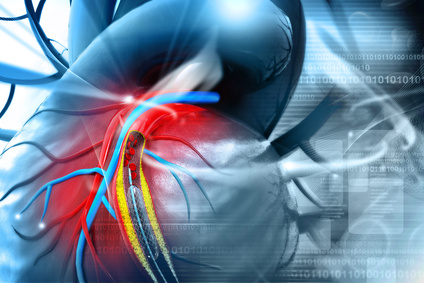
Intravascular ultrasound (IVUS) has proven its usefulness, improving outcomes by reducing mortality in unprotected left main coronary artery (LMCA) angioplasty.
A new strategy consists in conducting an IVUS after pre-dilation, after stent implantation, and post-dilation. However, such alternative has not been validated yet.
Researchers analyzed 9525 patients from the IRIS-DES registry with severe left main coronary artery, bifurcation, long or diffuse (>30 mm), or severely calcified lesions controlled through IVUS. Among them, 3374 (35.4%) patients underwent endoluminal ultrasound at pre-dilation, after stent implantation, and post-dilation (iPSP).
Read also: Detection of Late Complications After EVAR.
The primary endpoint at follow-up was cardiac death, target-vessel infarction, and target-vessel revascularization (TVR).
Patients who underwent iPSP angioplasty were younger and mostly male, had more risk factors, bifurcation lesions, severe calcification, longer lesions, and more stents. Consequently, researchers used propensity score matching to adjust populations and reach uniformity, leaving 3130 patients in each group.
The follow-up went on for 3 years and the primary endpoint favored iPSP patients (5.6% vs. 7.9%; adjusted hazard ratio [HR]: 0.71; 95% confidence interval [CI]: 0.63 to 0.81; p < 0.001).
Read also: EuroPCR 2020 | Aortic Valve in Valve in the Long Term.
Analyzing the secondary endpoints, iPSP was associated with lower mortality (2.2% vs. 3.4%; adjusted HR: 0.62; 95% CI: 0.51 to 0.75; p 0.003) and TVR (3.4% vs. 4.6%; adjusted HR: 0.74; 95% CI: 0.63 to 0.87; p < 0.001), and there were no differences as regards infarction (0.3% vs. 0.5%; adjusted HR: 0.65; 95% CI: 0.38 to 1.10; p = 0.10).
Conclusion
In patients who underwent complex unprotected left main coronary artery angioplasty with drug-eluting stents (DES), iPSP was associated with a lower risk of cardiac events after 3 years of follow-up.
Consequently, iPSP should be used more proactively in complex coronary angioplasties nowadays.
Courtesy of Dr. Carlos Fava.
Título Original: Optimal Stenting Technique for Complex Coronary Lesions Intracoronary Imaging-Guided Pre-Dilation, Stent Sizing, and Post-Dilation.
Referencia: Hanbit Park, el al. J AmColl Cardiol Intv 2020;13:1403–13.
Get the latest scientific articles on interventional cardiologySubscribe to our weekly newsletter
We are interested in your opinion. Please, leave your comments, thoughts, questions, etc., below. They will be most welcome.