






The outcomes of this work are important to plan valve replacement with the largest possible prosthesis allowed by patient anatomy in the index procedure.
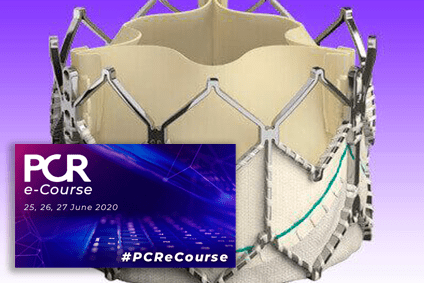
As a worldwide trend, increasingly more patients are receiving bioprostheses, which have improved a lot but still tend to become deteriorated and require a valve-in-valve procedure if the patient is no longer a suitable candidate for surgery.
One of the main differences compared with conventional transcatheter aortic valve replacement is that valve-in-valve procedures tend to finish with residual gradient, which might affect the long-term durability of the prosthesis.
This work, presented at the virtual EuroPCR 2020 and simultaneously published in the European Heart Journal, analyzed 1006 valve-in-valve procedures from the VIVID registry. Mean patient age was 77.7 years old and the mean Society of Thoracic Surgeons (STS)-PROM score was 7.3%.
About half (52%) of patients received self-expanding valves (CoreValve or Evolut), and 43.2% received balloon-expandable prostheses of any generation (Sapien/Sapien XT/S3).
Survival at 8 years was 38% overall, but, comparing patients with small (internal diameter <20 mm) and large failed prostheses, survival was lower with smaller devices (33.2% vs. 40.5%; p = 0.01).
Smaller failed bioprostheses, age, lower ejection fraction, chronic kidney disease, diabetes, and nontransfemoral access were all independent predictors of mortality. The factors associated with reintervention were pre-existing severe patient prosthesis mismatch, device suboptimal implantation, age, and balloon-expandable valve use.
During the same EuroPCR session, researchers presented an update on the BASILICA registry. BASILICA is a technique that involves lacerating the preexisting aortic leaflet (native or failed prosthetic) with radiofrequency immediately before new prosthesis implantation in patients at high risk for coronary obstruction.
Read also: EuroPCR 2020 | Sudden Death Increase Two to Three Times While MI Rate Falls.
Now, the presentation reported 129 successful cases with the aforementioned procedure, including 22 cases of double BASILICA (both left- and right-sided leaflets were lacerated).
The technique was associated with a higher risk of stroke, compared with controls, but a lower risk of coronary obstruction and of 30-day mortality, stroke, and coronary obstruction, as a composite. The double BASILICA technique had a bad prognosis, as opposed to the laceration of a single leaflet.
Título original: Long-term outcomes after transcatheter aortic valve implantation in failed bioprosthetic valves.
Presentador: Danny Dvir. Eur Heart J. 2020; Epub ahead of print y presentado en forma virtual en el EuroPCR 2020.
Get the latest scientific articles on interventional cardiologySubscribe to our weekly newsletter
We are interested in your opinion. Please, leave your comments, thoughts, questions, etc., below. They will be most welcome.



