






Reference: Pierre Deharo et al. J Am Coll Cardiol 2020;76:489–99.
Get the latest scientific articles on interventional cardiologySubscribe to our weekly newsletter
We are interested in your opinion. Please, leave your comments, thoughts, questions, etc., below. They will be most welcome.
Patients with dysfunctional biological prosthetic valves have better outcomes with TAVR vs. surgical reintervention, beyond surgical risk. This study outcomes might even call into question the age cutoff to consider a mechanical vs. a biological prosthesis at first surgery.
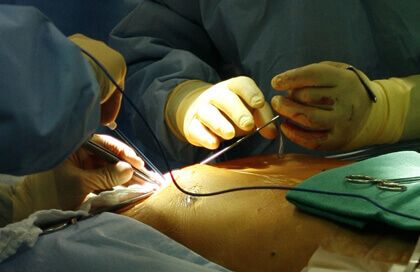
This analysis recently published in JACC looked at the outcomes of both possible strategies to treat a dysfunctional biological prosthesis, surgical reintervention and valve-in-valve.
It included 4327 patients in France with dysfunctional biological prosthesis between 2010 and 2019, which were compared using propensity score.
After matching, 717 with identical clinical and risk profile were left in each arm.
At 30 days, valve-in-valve was associated to lower end point rate, a combination of all cause death, stroke, MI and life-threatening major bleeding (OR: 0.62; CI 95%: 0.44 to 0.88; p=0.03). Up to this point, there were no big surprises, since a less invasive procedure will always have an acute benefit over a more aggressive one.
Read also: High Mortality Rates for Redo Surgery After TAVR.
At long term follow-up (mean 516 days) the combined end point (plus repeat hospitalization for cardiac failure) resulted similar between both arms (OR: 1.18; CI 95%: 0.99 s 1.41; p=0.26).
Repeat hospitalization for cardiac failure and pacemaker implantation were more frequent in the TAVR group.
Despite the latter, there was a clear interaction between all cause and cardiovascular mortality with valve-in-valve.
Read also: Is V-in-V the Treatment of Choice in Cases of Failed Biological Prosthesis?
These results are in line with the summary from the European Heart Journal we published on August 4, 2020.
Conclusion
Valve in valve is associated with better outcomes at short term and similar outcomes at long term vs. surgical reintervention in patients with dysfunctional biological prothesis in aortic position.
Original Title: Transcatheter Valve-in-Valve Aortic Valve Replacement as an Alternative to Surgical Re-Replacement.
Reference: Pierre Deharo et al. J Am Coll Cardiol 2020;76:489–99.
Get the latest scientific articles on interventional cardiologySubscribe to our weekly newsletter
We are interested in your opinion. Please, leave your comments, thoughts, questions, etc., below. They will be most welcome.



