



Watch again our Webinar on Short Dual Therapy in Patients with High Bleeding Risk

Watch again our Webinar on “Short Dual Therapy in Patients with High Bleeding Risk” on our Youtube account. The event was held on 12/08/2020 and had the participation of more than 200 people and the support of ABBOTT.

What things will I learn if I watch this video?

  • 04:02 | Innovation: Short Dual Therapy in Patients with High Risk of Bleeding.
  • 45:12| Interactive Clinical Case with a focus on Antiplatelet Aggregation.
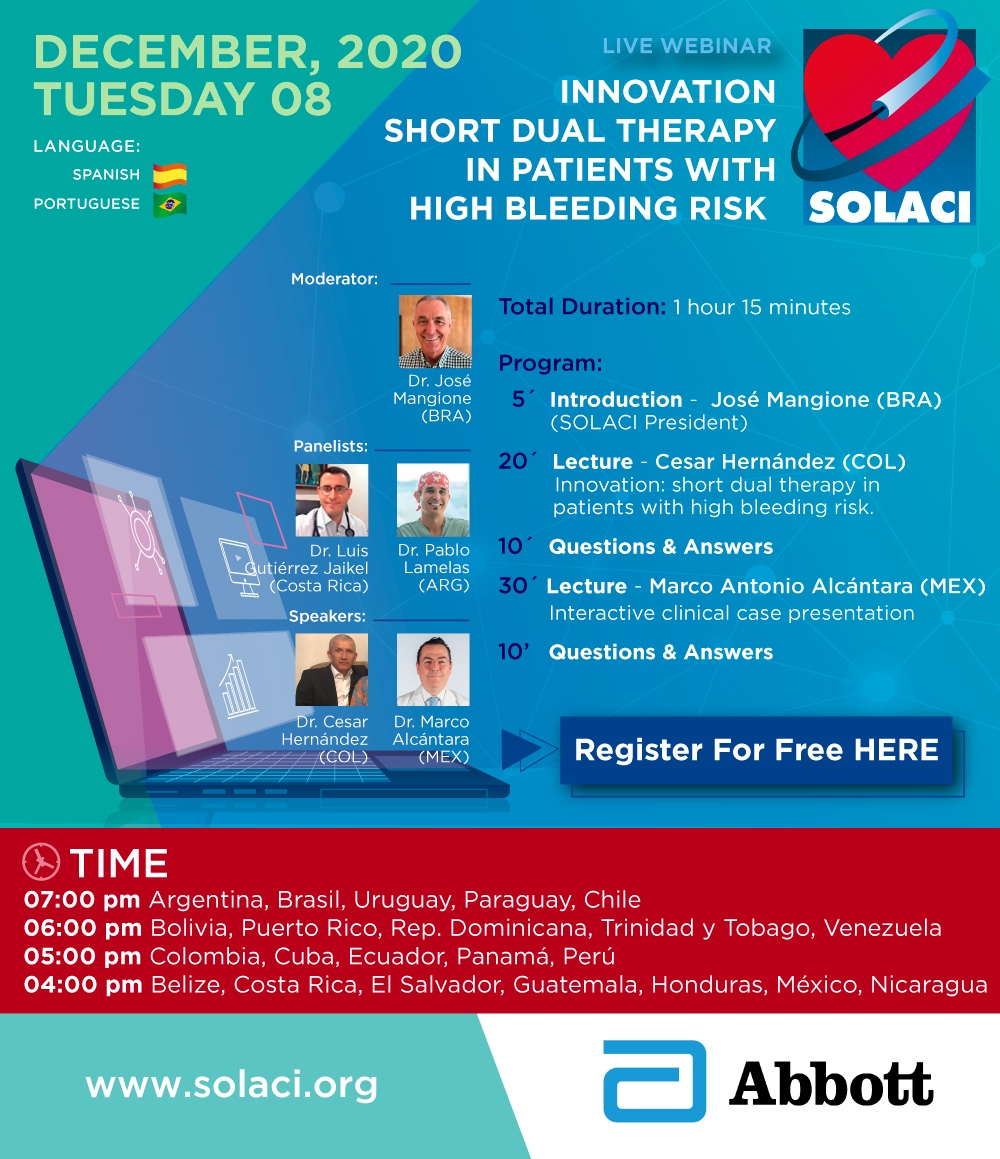
Innovation short dual therapy in patients with high bleeding risk

Subscribe to our weekly newsletter

Get the latest scientific articles on interventional cardiology

More articles by this author

Guatemala Sessions 2026 – Young Interventional Cardiologists Contest – Submit Your Case

The call for applications to participate in the Young Interventional Cardiologists Competition at the Guatemala 2026 Regional Sessions is now open. The event will...

Ticagrelor vs Clopidogrel in ACS Patients Receiving DOAC After PCI: More Bleeding Without Ischemic Benefit?

In patients with acute coronary syndrome (ACS) who require direct oral anticoagulation (DOAC) and undergo percutaneous coronary intervention (PCI), current guidelines recommend a dual...

Watch Again: Clinical Implications of Structural Heart Interventions — TAVI and MitraClip in Daily Practice

The recording of the webinar “Structural Interventions: TAVI and MitraClip in Daily Practice” is now available on the SOLACI YouTube channel. The activity was...

06/03 | SOLACI Technicians & Nurses Webinar – Clinical Impact of Structural Interventions: TAVI and MitraClip in Current Practice

The Latin American Society of Interventional Cardiology (SOLACI), through its Technicians and Nurses Department, invites you to participate in a new scientific webinar entitled...

LEAVE A REPLY

Please enter your comment!
Please enter your name here

Related Articles

SOLACI Sessionsspot_img
Jornadas Guatemala 2026

Recent Articles

Plaque Ruptures in Non-Culprit Arteries: Follow-Up With Intravascular Imaging

Plaque rupture remains one of the most important pathophysiological mechanisms in acute coronary syndromes. However, not all ruptures manifest clinically as ischemia, myocardial infarction,...

Drug-Eluting Stents in Peripheral Arterial Disease: When Should They Be Used?

Peripheral drug-eluting stents have transformed the treatment of peripheral arterial disease by reducing restenosis rates and the need for repeat interventions. However, the emergence...

OCT-Detected High-Risk Plaques Predict Recurrent Events After Myocardial Infarction

After a myocardial infarction (MI), non-culprit lesions are often deferred when they are not flow-limiting (negative FFR). However, these lesions continue to represent an...

