



The New Sirolimus Eluting Balloons Are Also Effective

The technological development of drug eluting stents has allowed us to treat increasingly complex patients, with around 10% stenosis and using more, and longer stents. 
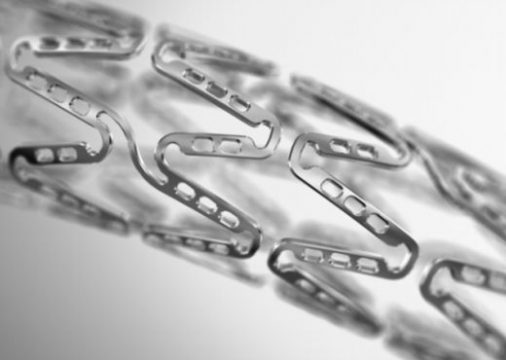
stent-liberador-drogas-sirolimus-everolimus

This situation generates a great challenge: keep using stents or use paclitaxel coated balloons (PCB). At present, there are sirolimus drug coated balloons (SCB), but we do not have enough data to determine which one performs better. 

This is the first randomized study to compare SCB against PCB in the treatment of instent restenosis.

The study included 101 patients: 50 received PCI with SCB and 51 with PCB.

Primary end point at 6 months was Late Lumen Loss (LLL) by quantitative angiography.

There were no differences between populations. 80% were men, 57% diabetic and 35% were admitted with unstable angina. Neither were there angiographic differences after procedure. 

Read also: Use of OCT FFR on ACS Clinical Outcomes.

After a 6-month follow-up, there were no differences in primary end point (LLL 0.25±0.57 mm in PCB vs 0.26±0.60 mm in SCB).

After 12 months, there were no differences in death, MI, ischemia driven revascularization or restenosis. 

Conclusion

This is the first study to compare the new sirolimus coated balloon against paclitaxel coated balloons. This study has shown similar angiographic and clinical evolution in the treatment of instent restenosis.

Dr. Carlos Fava - Consejo Editorial SOLACI

Dr. Carlos Fava.
Member of the Editorial Board of SOLACI.org.

Original Title: Combined Analysis of Two Parallel Randomized Trials of Sirolimus-Coated and Paclitaxel-Coated Balloons in Coronary In-Stent Restenosis Lesions.

Reference: Bruno Scheller,et al. Circ Cardiovasc Interv. 2022;15:e012305. DOI:10.1161/CIRCINTERVENTIONS.122.012305.


Subscribe to our weekly newsletter

Get the latest scientific articles on interventional cardiology

More articles by this author

Coronary Perforations and Use of Covered Stents: Safe and Effective Long-Term Strategy?

Coronary perforations remain one of the most serious complications of percutaneous coronary intervention (PCI), especially in cases of Ellis ruptures type III. In these...

Left Main Coronary Artery Disease: Intravascular Imaging-Guided PCI vs. Coronary Artery Bypass Grafting

Multiple randomized clinical trials have demonstrated superior outcomes with coronary artery bypass grafting (CABG) vs. percutaneous coronary intervention (PCI) in patients with left main...

AHA 2025 | OCEAN Study: Anticoagulation vs. Antiplatelet Therapy After Successful Atrial Fibrillation Ablation

After a successful atrial fibrillation (AF) ablation, the need to maintain long-term anticoagulation (AC) remains uncertain, especially considering the very low residual embolic risk...

AHA 2025 | VESALIUS-CV: Evolocumab in High-Cardiovascular-Risk Patients Without Prior MI or Stroke

LDL cholesterol is a well-established factor for cardiovascular disease. Therapy with PCSK9 inhibitors, including evolocumab, has been shown to reduce the risk of cardiovascular...

LEAVE A REPLY

Please enter your comment!
Please enter your name here

Related Articles

SOLACI Sessionsspot_img

Recent Articles

Coronary Perforations and Use of Covered Stents: Safe and Effective Long-Term Strategy?

Coronary perforations remain one of the most serious complications of percutaneous coronary intervention (PCI), especially in cases of Ellis ruptures type III. In these...

Is it really necessary to monitor all patients after TAVR?

Conduction disorders (CD) after transcatheter aortic valve replacement (TAVR) are a frequent complication and may lead to the need for permanent pacemaker implantation (PPI)....

Is it really necessary to monitor all patients after TAVR?

Conduction disorders (CD) after transcatheter aortic valve replacement (TAVR) are a frequent complication and may lead to the need for permanent pacemaker implantation (PPI)....

