






Currently, the number of transcatheter aortic valve replacement (TAVR) procedures is increasing as it expands towards a lower-risk younger population. Therefore, continuous technological advancement is imperative to reduce post-procedural complications. The Food and Drug Administration (FDA) has approved the SavyWire, a preformed 0.035-gauge guidewire that can perform three essential functions: 1) it facilitates prosthesis transportation and placement; 2) it allows for continuous hemodynamic monitoring through a distal optical fiber sensor; and 3) it enables wire pacing through the left ventricle.
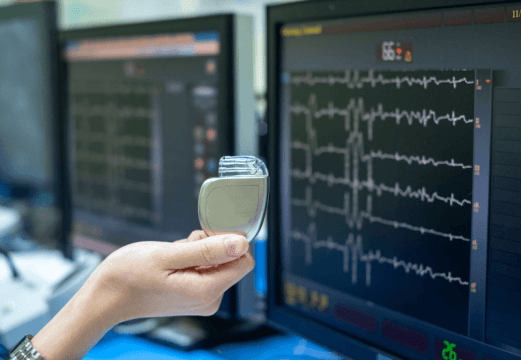
The objective of the prospective multicenter SAFE-TAVI (SavvyWire Efficacy and Safety in Transcatheter Aortic Valve Implantation Procedures) Study was to assess the safety and efficacy of the SavyWire in TAVR with both balloon-expandable and self-expandable valves.
The primary endpoint (PEP) was rapid and effective pacing with a significant drop in pressure (reduction of systolic pressure below 60 mmHg). The secondary safety endpoint (SSE) was absence of guidewire-related major complications.
The analysis included 119 patients; the mean age was 82.2 ± 5.9 years, and 49.6% of subjects were women. The mean STS score was 3.85. All patients were treated using the transfemoral access. Balloon-expandable valves were used in 37.8% of cases, with predilation performed in 74.8% and postdilation in 11.8% of patients.
Read also: Use of IVL in Calcified Coronary Lesions in a Real World Population.
Regarding the PEP, 98.3% of patients showed a drop in systolic pressure below 60 mmHg, with a mean arterial systolic pressure during rapid pacing of 46.6±11.3 mmHg. The SSE was achieved in 99.2% of cases, with no mortality, stroke, guidewire kinking, or ventricular perforation events.
Conclusion
The results of this study demonstrate the safety and efficacy of the SavyWire during TAVR. This device may contribute to minimizing intervention during the procedure and improving clinical outcomes after TAVR implantation.
Dr. Andrés Rodríguez.
Member of the Editorial Board of SOLACI.org.
Original Title: Safety and Efficacy of Transcatheter Aortic Valve Replacement With a Pressure Sensor and Pacing Guidewire SAFE-TAVI Trial.
Reference: Ander Regueiro, MD, PHD et al J Am Coll Cardiol Intv 2023.
Subscribe to our weekly newsletter
Get the latest scientific articles on interventional cardiology



